
Welcome Back- Spring Term
Happy New Year and welcome back to the Spring Term! We hope you all enjoyed a restful, happy and healthy break and that the children are feeling refreshed and ready for another exciting half term of learning in Year 1.
We’ve lots to look forward to over the coming weeks:
-
In maths, we’ll be developing our understanding of addition, using practical resources and number strategies to help us become confident mathematicians.
-
In reading and writing, we’ve some exciting new books to enjoy together.
-
In topic, we’ll become historians, learning all about the history of toys and games and how they’ve changed over time.
-
In science our focus will be on animals, exploring different types and their characteristics.
-
In PE, we’ll be practising our throwing skills, developing coordination and control.
-
In RE, we’ll be learning about how different religions welcome new life.
-
In phonics, we’ll continue learning new GPCs and tricky words to support reading and spelling.
-
In Living and Learning, we’ll focus on British values, consent and respect, helping children develop positive relationships and understanding.
Important Notices
-
PE days are Tuesday and Friday – please ensure children come to school in the correct PE kit.
-
Please continue to return signed reading records and library books on Thursdays.
-
With the unpredictable weather, please make sure your child brings a warm coat to school each day.
-
Children should bring a clean, labelled water bottle to school daily.
Watch Us While We Work
We would love to welcome you into the classroom on Wednesday 14th January at 09:00 for “Watch Us While We Work.” This is a wonderful opportunity to celebrate your child’s learning and pick up some helpful tips for supporting them at home.
Thank you, as always, for your continued support. We are really looking forward to a busy and enjoyable Spring Term together!
An Autumn Term to Remember
We’ve reached the end of the Autumn term and what an amazing 15 weeks it’s been! We’ve already come such a long way. It’s been a real pleasure getting to know the children and seeing how much progress they’ve made in such a short space of time.
Our phonics journey has been particularly exciting, with the children embracing their learning enthusiastically and growing in confidence each day. We are developing as skilled transcribers and flexible mathematicians, showing increasing independence and resilience in our learning.
This term, we’ve been busy wearing many different hats – geographers, artists, gymnasts, angels and shepherds. We’ve enjoyed reading about Flat Stanley, Hermelin, Bernard, Katie and Dasher – stories that have inspired curiosity and imagination. Alongside our learning, friendships have continued to grow stronger (even if a few jumpers have gone missing along the way!).
Thank you to all parents and carers for your ongoing support at home. It really does make a huge difference and your hard work is greatly appreciated.
We’re very much looking forward to the Spring term and all the excitement and learning that lies ahead.
Help at home by enjoying a well-earned rest (and daily reading, of course).
Merry Christmas to those who celebrate and Happy New Year to everyone. We look forward to welcoming you back soon.
Mr Nash and the Year 1 team
Maths – Patterns
This week, in maths, we’ve been learning about 2D shapes and patterns. Our focus has been on aligning shapes with one another by rotating them to connect their edges.
The children have been developing their spatial reasoning skills by placing and rotating shapes to create images.
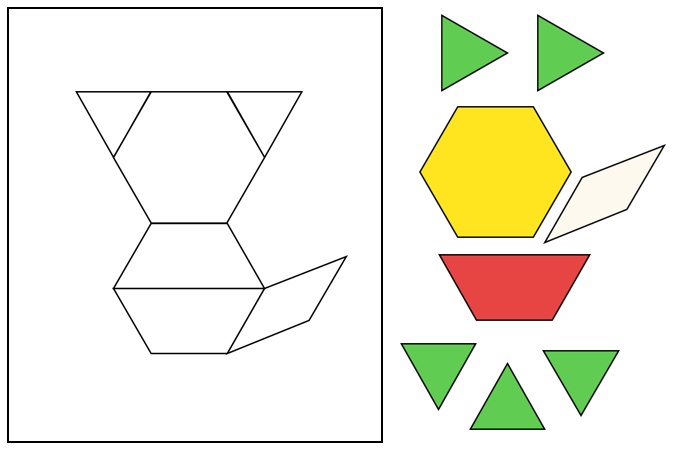
We’ve also enjoyed exploring patterns. A pattern is a repeated arrangement of shapes, lines or colours. We’ve been noticing and describing the characteristics of patterns and had a go at making some of our own.
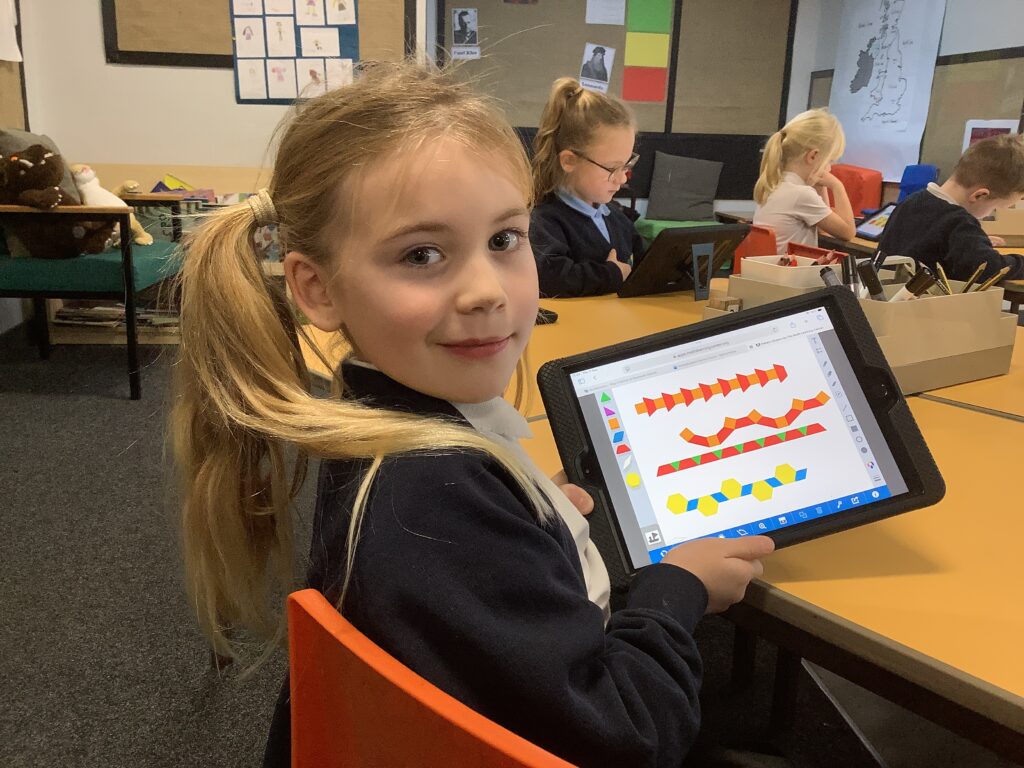
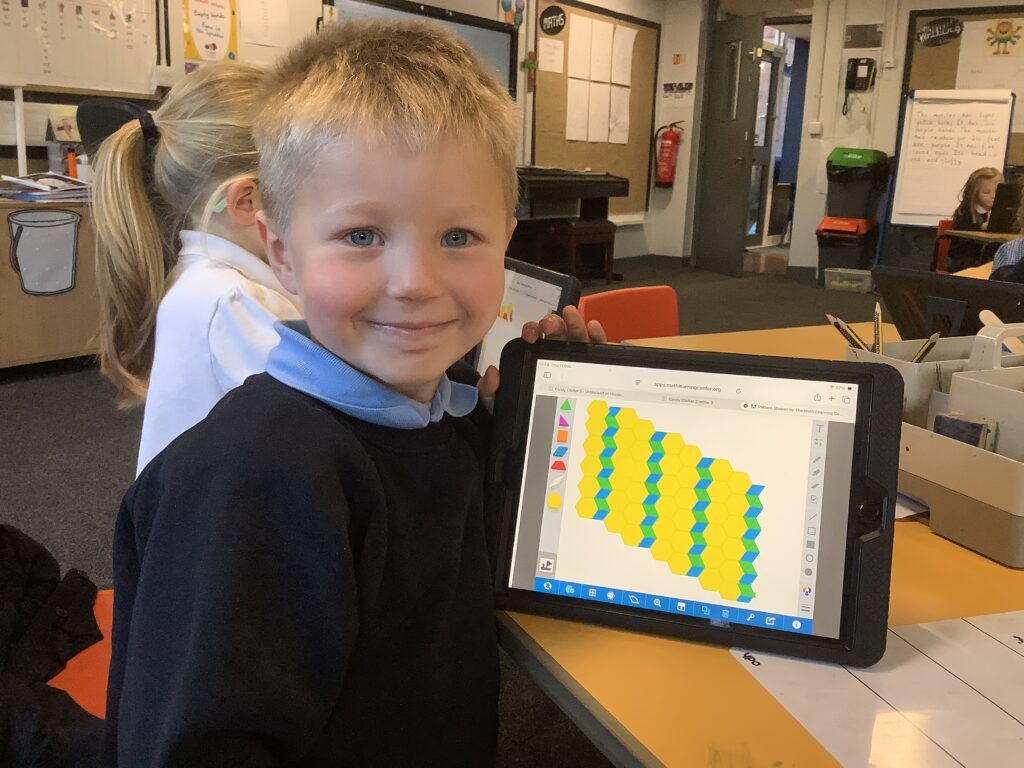
Help at home by making some images or patterns yourself.
Writing – Nouns and Adjectives
In writing, we’ve been learning about nouns and adjectives.
- A noun is a person, place or thing.
- An adjective gives information about a noun.
We’ve had lots of fun using nouns and adjectives to describe different parts of a monster, inspired by Not Now Bernard by David McKee. The children thought carefully about what the monster looks like and used adjectives to add information.

The monster has five friendly eyes.
He has sharp, pointy horns on top of his red head.
It has gigantic, purple feet.
The monster has rainbow fur all over its round body.
Help at home by choosing an object at home (like a toy or a piece of fruit) and ask your child to name the noun then think of some adjectives to give information about it.
Topic (Art) – Leonardo da Vinci
This half term, in topic, we’re artists. This week, we’ve explored three famous pieces:
- The Vitruvian Man
- The Last Supper
- The Mona Lisa
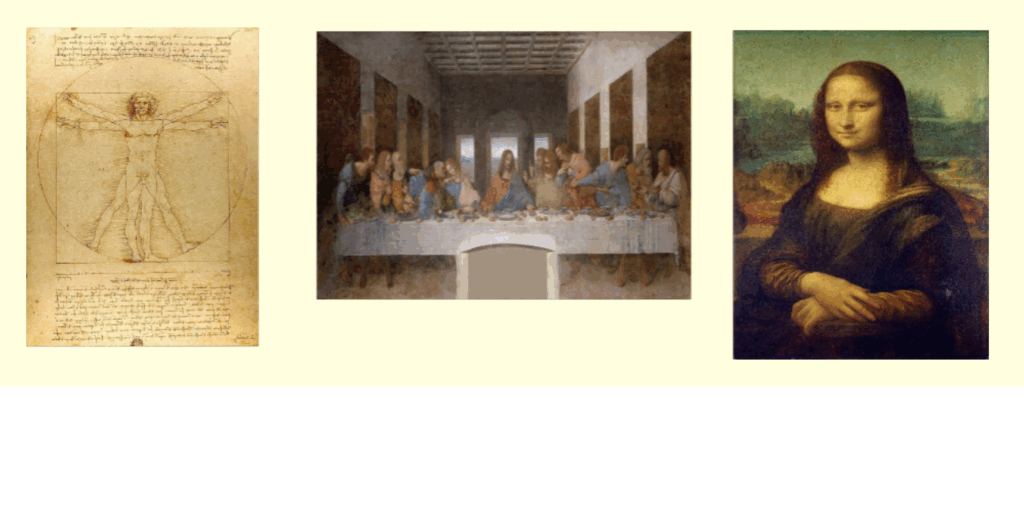
We compared the works and talked about whether we thought they had been created by Leonardo da Vinci or Paul Klee (our focus artists this half term). The children used our art vocabulary skilfully, thinking carefully about line, shape, pattern, texture, tone, primary colours and secondary colours.
“I don’t think it’s Paul Klee because there are no shapes.”
“I think Leonardo da Vinci made it because the tone is darker.”
“All the people look quite real so I think it’s Leonardo da Vinci.”
We then decided which picture might be the odd one out and explained why. We had some fantastic discussions…
“That one (Vitruvian Man) reminds me of Paul Klee because it has a square and a circle.”
“One of them has writing on.”
“It looks like it was done with a pen or pencil and the others look like paint.”
“The Mona Lisa is the odd one out because she’s the only lady.”
Help at home by exploring some art together. Encourage your child to talk about line, shape, pattern, texture and tone.
Maths – Partitioning 10
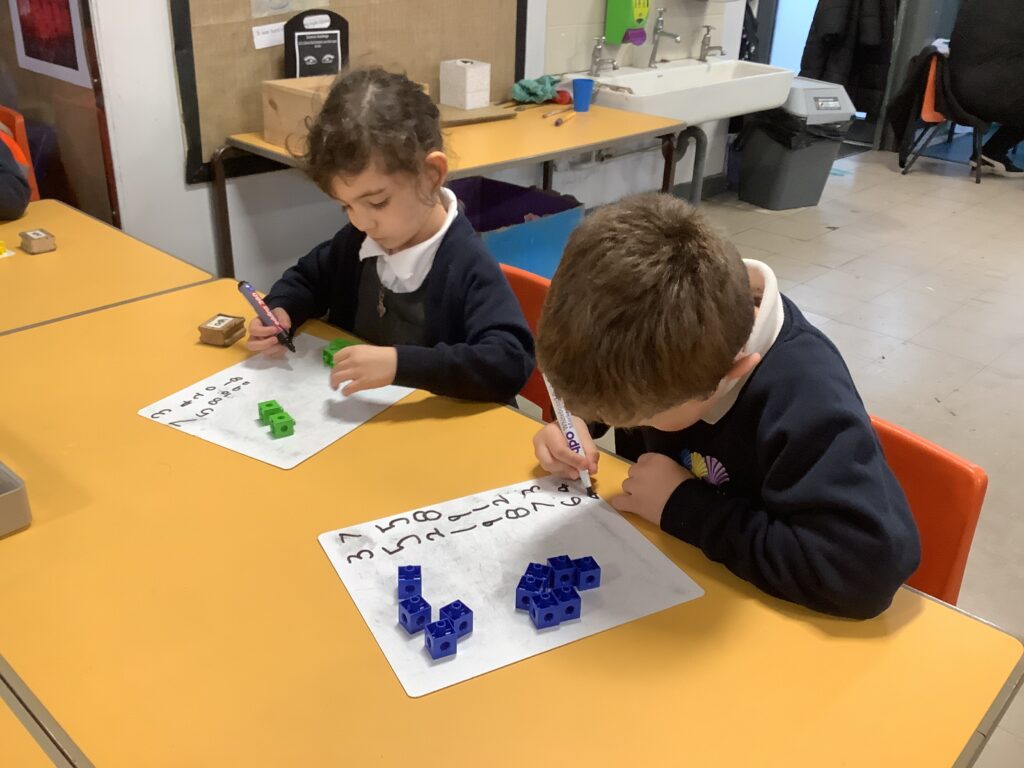
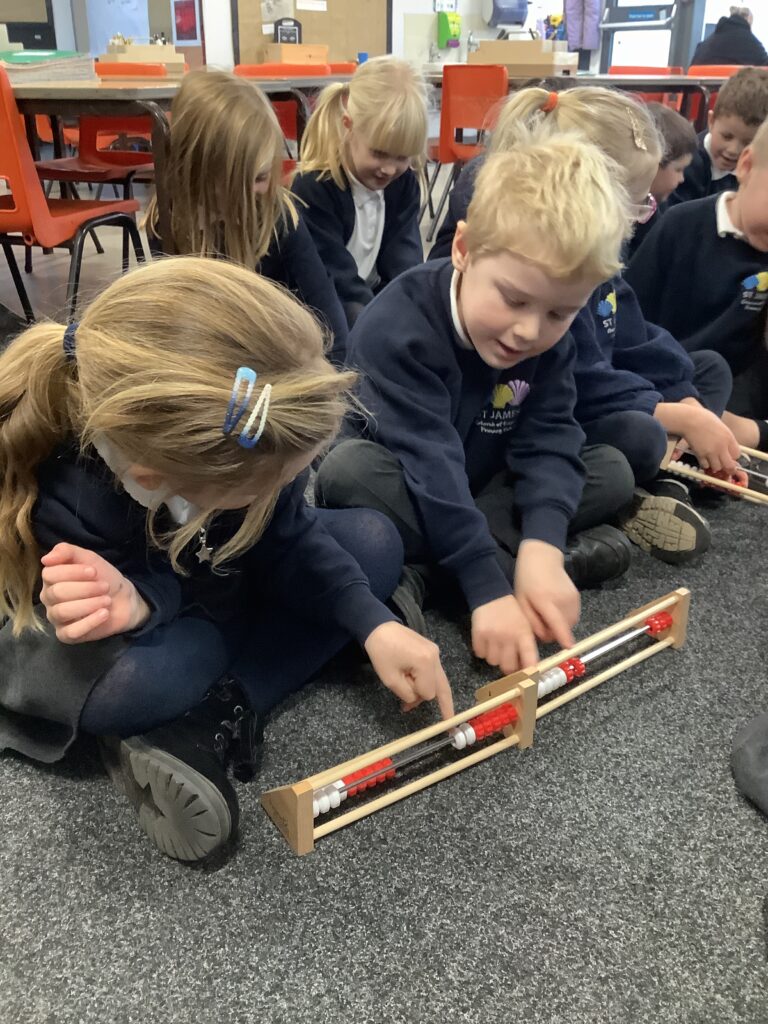
In Maths this week, we’ve been exploring different ways to partition the number 10. We practised finding number pairs that make 10 and talked about how to make sure we work systematically so that we don’t miss any combinations.
We used lots of representations to help our thinking, including ten frames, Multilink cubes and rekenreks, and we enjoyed spotting patterns as the numbers changed.

Help at home by challenging your child to find missing parts of 10. “What does __ need to make 10?”
Living and Learning – Friends and family
This week, in Living and Learning, we’ve been exploring what it means to feel happy and how we can recognise happiness in ourselves and others.
We talked about what happy faces and bodies might look like and how we can tell when someone might be feeling good inside. The children also thought about what makes them feel happy, from spending time with friends to enjoying their favourite activities.
We compared happy and sad faces and added new vocabulary the children suggested. They were brilliant at thinking about their own experiences and how feelings can change.
As part of our learning, we spent time getting to know Elmer, the colourful patchwork elephant who loves to make others smile. In the story, Elmer starts to worry when he thinks the other elephants are laughing at him but soon realises they are actually laughing with him because he brings so much joy to the herd.
The children coloured in their own elephants and we celebrated that each one was joyful and unique.
Help at home by labelling some happy moments at home – feel free to share! Our year 1 are becoming experts at recognising and talking about emotions.
Science – Material Detectives
This week in Science, Year 1 have been learning all about materials and what everyday objects are made from. We became material detectives and explored our school, inside and out, to see what we could discover.
The children worked brilliantly as they searched for objects made of wood, plastic, metal, glass, fabric, and rock. They were excited to spot wooden doors, metal railings, plastic chairs, glass windows, cosy fabric cushions and even rock paving slabs outside.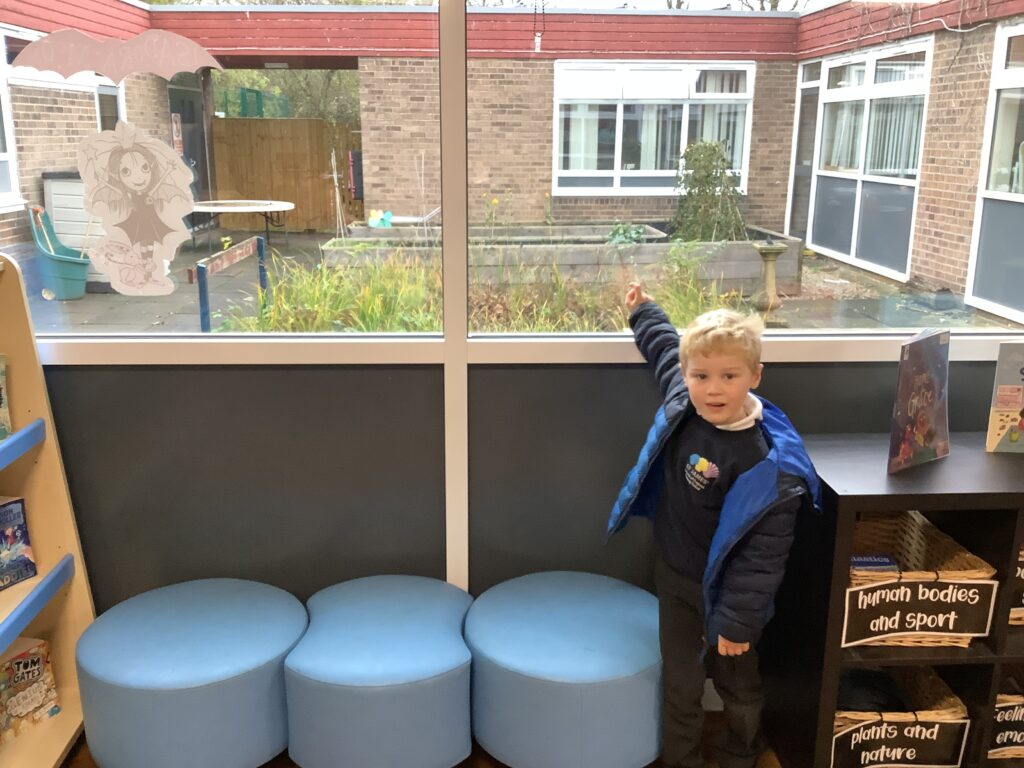
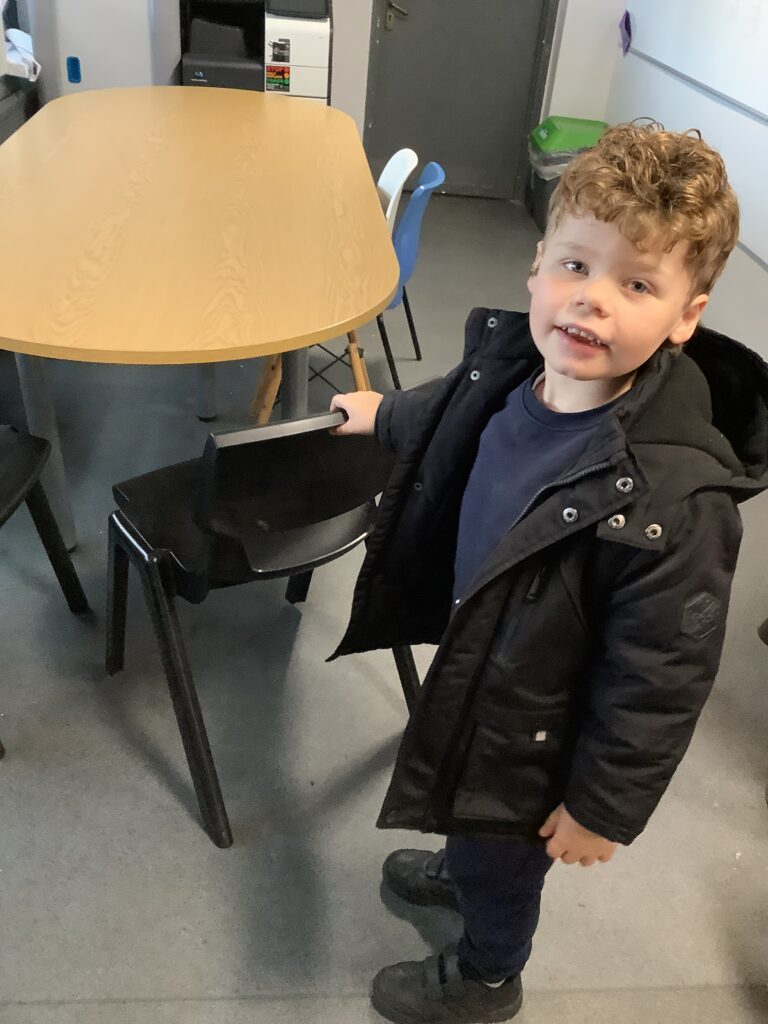
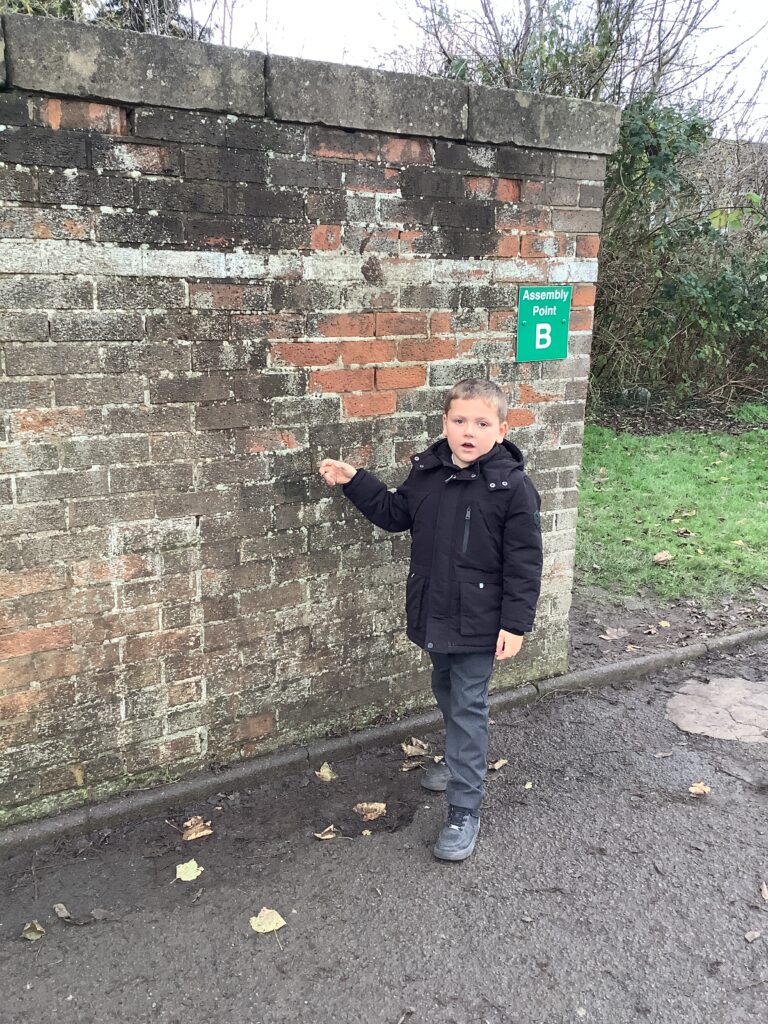
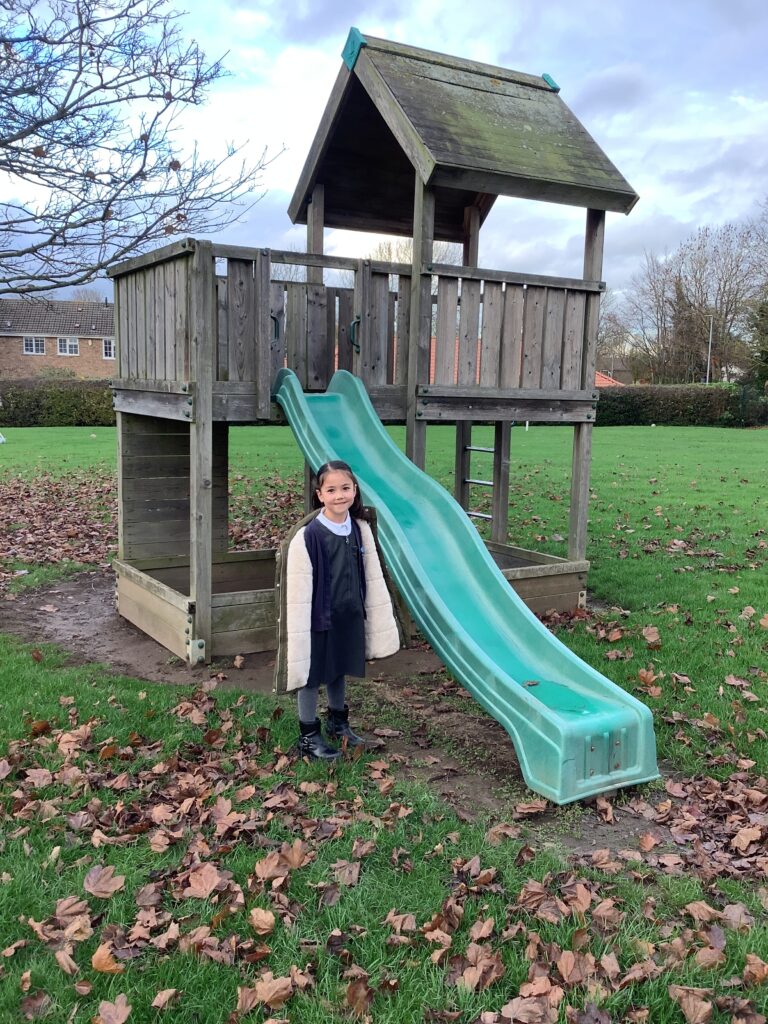
As we continue to develop our Working Scientifically skills, the children focused on making observations, noticing not just the material but also its texture, use and why it might’ve been chosen. Their curiosity and attention to detail were fantastic to see.
Help at home
Invite your child to look around your home and choose an object of each material (wood, plastic, metal, glass, fabric, rock). Ask them to describe the material and why they think it’s suitable for that object.
RE – Waiting for Christmas
In our RE lesson this week, we’ve been learning about why waiting and preparing for Christmas is such an important part of the Christian faith.
We began by exploring the Nativity story. The children thought carefully about which characters had to wait for something special to happen. They spotted lots of examples:
- Mary waiting for baby Jesus to arrive
- Mary and Joseph waiting to find somewhere safe to stay in Bethlehem
- The Wise Men waiting and travelling a very long way to meet the new baby king
It helped us understand that waiting has always been a big part of the Christmas story.
We then learned that Christians have a special time of waiting and getting ready before Christmas called Advent. The children shared their own experiences of advent calendars and what it feels like to open a door each day. We looked at different Advent traditions such as advent candles and advent wreaths and discussed how these help Christians count down to Christmas in a thoughtful and meaningful way.
For many Christians, Christmas is not only about presents, decorations or delicious food. It is a time to remember and celebrate the Christian belief that Jesus came to earth as both God and human. Because of this, Christians aren’t just waiting for Christmas Day – they are waiting to celebrate the birth of Jesus.
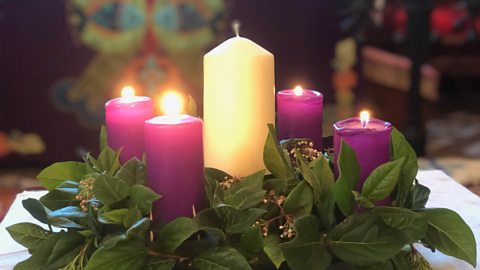
We looked closely at the Advent wreath and talked about what each candle can represent:
- Hope
- Peace
- Love
- Joy
- Jesus – the white candle in the middle, lit on Christmas Day
The children learned that each Sunday during Advent, a new candle is lit, and the final candle is lit on Christmas Day itself.
Help at home by asking your child what they are currently waiting or hoping for – maybe a birthday, a visit, or a special event. Talk about how waiting can feel exciting, difficult or joyful.
PE – Year 1 Take Flight!
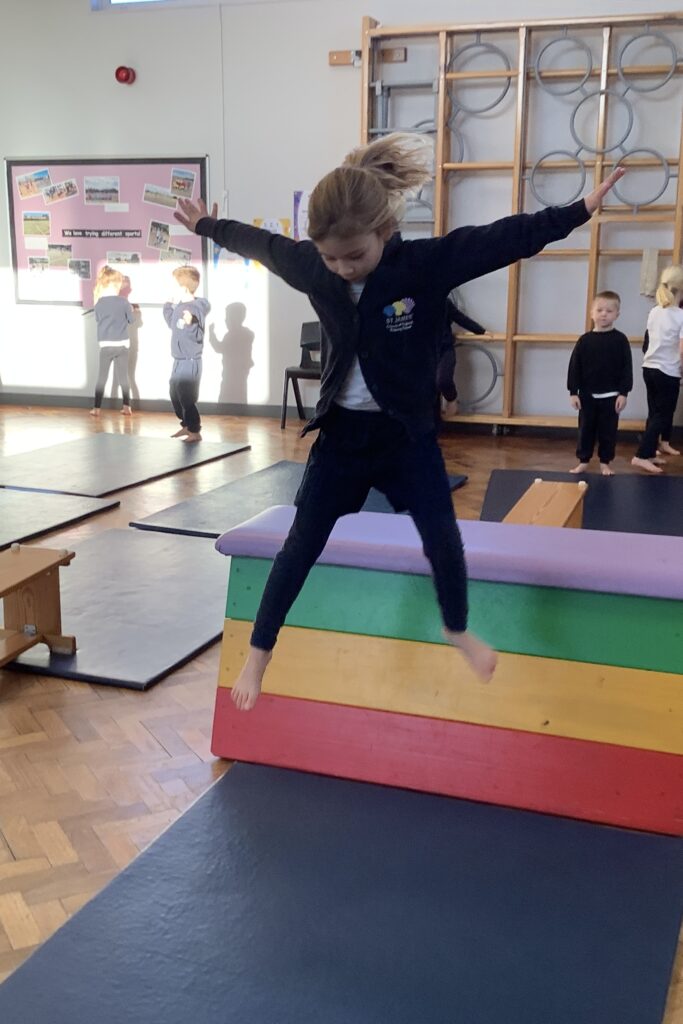
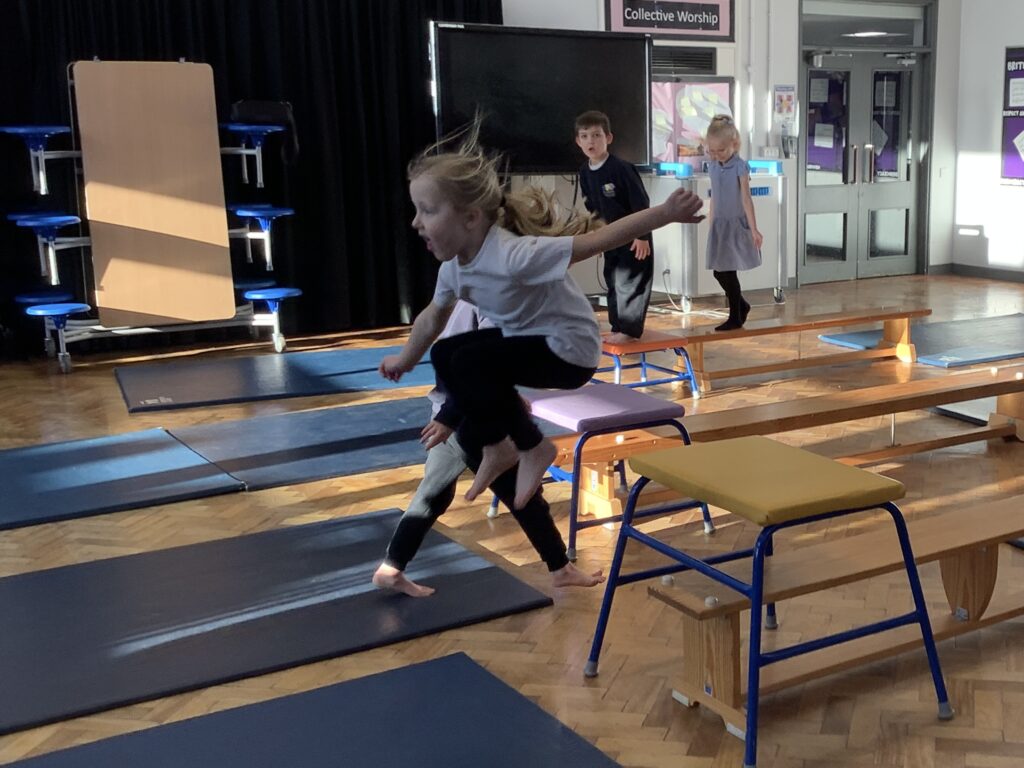
This week in PE, Year 1 have been developing their gymnastics skills by exploring different types of jumps. The children have been fantastic at listening carefully, moving safely and giving their best effort.
We focused on a range of basic jumps, including:
-
Straight jump – keeping the body tall like a pencil with arms stretched overhead.
-
Star jump – jumping out wide with arms and legs spread, then landing back together.
-
Tuck jump – lifting knees towards the tummy while keeping the back straight.
-
Half-turn jump – making a small controlled turn in the air and landing softly facing the opposite direction.
The children practised taking off with two feet, landing with bent knees and keeping their arms out for balance. They also learned how to sequence their movements with control and confidence.
Staying Safe in Gymnastics
Safety is always our top priority. We reminded the children to:
-
Look for clear space before they jump.
-
Use two-footed take-offs and landings.
-
Keep knees bent when landing.
-
Move carefully on and around the apparatus.
-
Listen closely to instructions and wait for their turn.
Everyone did brilliantly at following our safety rules.
Help at home by trying some soft landings at home: Lay down a folded blanket or cushion and encourage your child to practise bending their knees to land softly.