
Our weekly message: Friday 16 October 2026
On Monday, we’re looking forward to welcoming a special visitor. Mrs Abi Clay will visit to inspect St James’ CE Primary under the SIAMS Framework. A SIAMS inspection is an opportunity to highlight the impact that the school’s Christian vision has on the flourishing of the whole school community. We’re looking forward to celebrating all the great things that happen in our happy and healthy place to achieve and believe.
Thank you…
…for your kind words on hearing the news that I’ll be leaving St James’ CE Primary and Sphere Federation at the end of the Autumn term. After working in schools for 30 years (10 years as a teacher and 20 years as a headteacher), it feels like it’s time for a change and new challenge, although I’ll be very sad to leave my Sphere Federation family.
Earlier this week, our Chair of Governors sent a letter to you explaining the interim arrangements for the Spring and Summer terms. I’m confident that Miss Beatson and all the great teachers and support staff here at St James’ CE Primary will continue to help your child to flourish in this happy and healthy place to learn.
Junior leaders
Our new Junior Leadership Team (JLT) were voted for this week. Well done to everyone who made a speech – we were impressed by all of you.
After a democratic decision, our new junior leaders are:
- Year 1: Elodie, Ezra
- Year 2: George H, Darcey
- Year 3: Ava, Ada
- Year 4: Winnie, Rex
- Year 5: Sophie, Hattie
- Year 6: Alba, Jacob
Congratulations to you all – we’re sure you’ll do a grand job.
100% in November competition
Every week in November, there’s a chance for your child to win a £10 voucher if they’ve attended school every day in the week. So, that’s four weeks of prizes:
- Week 1: week beginning Monday 02 November
- Week 2: week beginning Monday 09 November
- Week 3: week beginning Monday 16 November
- Week 4: week beginning Monday 24 November
There’ll be two lucky draws: one for children in Reception and Key Stage 1, and another for children in Key Stage 2 (Years 3-6).
AI and safeguarding
As we all know Artificial Intelligence (AI) is making the news for all sorts of reasons. Whilst there’s some amazing things happening, there has to be a constant awareness of safeguarding. We need to make sure that we’re not exposing personal details to the wider world.
At the moment, there’s a lot of posts on social media about AI and school photos pics – perhaps you’ve seen them. Some people are recommending that parents ask AI to remove the watermark from a sample school photo so that they don’t need to pay the price. If you do this, your child’s photo’s ‘out there’ for AI to use in the future, responding in whatever way people ask.
Your child’s digital footprint (including photos) are your responsibility until they’re old enough to give consent; in legal terms that would be 18 years old. Please be aware of this when using social media and AI.
We’ll end this week with a message from our PTA…
Support Our School for Free While You Shop Online
If you’ve not already registered, we’d like to encourage families and friends to sign up to Easyfundraising, a free way to raise money for our school every time you shop online.
How it works
- Easyfundraising partners with over 8,000 retailers, including popular brands such as Tesco, Argos, John Lewis, Marks & Spencer, Currys and Booking.com.
- When you shop through the Easyfundraising website, app or browser extension, the retailer makes a donation to your chosen cause.
- There’s no extra cost to you. The donation comes from the retailer’s commission, not from your purchase.
Getting started
- Visit https://www.easyfundraising.org.uk/ and sign up for a free Easyfundraising account.
- Select our School as the cause you wish to support.
- Download the app or browser reminder to ensure you never miss a donation.
- Shop online as normal and track the donations raised.
- We do not receive any information on what you have purchased or from where you have been shopping, we only see your donation.
Thank you so much for your support!
Have a happy and healthy weekend.
Our weekly message: Friday 09 October 2026
Look out for our 100% in November competition coming up – more details next week on that.
With over five weeks in school, we’re now well and truly settled into the school year. School leaders have been busy doing observations of teaching and learning around school – there’s lots of great teaching and even greater learning going on! You can get a chance to see some of this next week…
Watch us while we work
We’re looking forward to seeing lots of you on Tuesday next week for another of our popular Watch Us While We Work sessions. These are a chance for you to visit your child’s class and see some teaching and learning.
- Start time: 9am (please arrive promptly)
- Focus: Reading and Maths (later in the year, the focus will be Phonics or Spelling and one of our Feelings First sessions)
Teachers will try to make the activities home-friendly so you can continue to support your child at home if you’d like.
There will be two short sessions, each about 15 minutes, and you can attend two classes, swapping half-way, so you can see two of your children if you need to.
The vast majority of children enjoy sharing their learning – it’s a cause for celebration and feeling proud. We recognise there might be one or two who struggle with the change or the extra people – please consult your child’s class teacher if you’ve any concerns.
Parents and carers of children in Reception should look out for Stay and Learn sessions across the year.
Is your child in Year 6?
The deadline to apply for a place in secondary school is approaching: 31 October 2026. Find more information on the Leeds City Council website.
Me and my community
Our next themed week, based around identity, diversity and community, will be take place from Monday 02 November. This is the first of two themed weeks in the year. The rest of this week’s message is a preview of the themed week…
In Me and My Community week, children will learn about what it means to belong to a community, from family to national or even international communities. Importantly, our children will also learn to respect and celebrate different communities. A variety of events and visitors are planned to help us deliver this aspect of our Living and Learning education.
Events and learning during the week will include looking at our own identity including belonging and self-esteem, and diversity of people around us including race, age, religion and disability. Children will also be getting out into the community working with local organisations and taking pride in the local area, for example by litter picking.
Active travel in the community
We encourage children to get out in the community in an active way on their way to and from school, with prizes available as part of the themed week. By walking/scooting/biking to school, families will be keeping our community safer and healthier by reducing congestion at the school gate. Maybe even pick up a piece of litter on the way! Even by parking further away from school, your child could then travel the final part of their journey by foot, bike or scooter. Bike and scooter storage facilities are available by the school gate.
Email us using [email protected] with a picture of your active travel, maybe by a landmark in our community on your route to school, for the chance to win one of three vouchers. Entries to be submitted by 4pm on Thursday 05 November.
New school charity
At the end of the themed week, classes will have the chance to discuss our charity shortlist and the Junior Leadership Team will have the final vote for which charity they would like our school to support, replacing our current charity, Martin House Hospice.
Can you help?
Maybe you speak another language and you’d be happy to speak to children about this or you’d like to share about your own family culture and heritage. If so, please contact the office to pass on your details. Also, do you have any local community links that may support our week?
Lots to look forward to. In the meantime, have a happy and healthy weekend!
Our weekly message: Thursday 01 October 2026
Tomorrow is one of five training days for teachers – this means school is closed tomorrow. The dates for the training days are:
- Tuesday 01 September 2026
- Friday 02 October 2026
- Friday 23 October 2026
- Monday 07 December 2026
- Monday 07 June 2027
Please remember to keep checking our website calendar for forthcoming events.
Another date…
A reminder that the PTA are hosting a school disco on Friday 16 October, 5.30pm – 7.30pm, at St James’ Church rooms. To book your child’s place, please top up the Friends of St James account on Arbor, or pay cash at the school office. The cost is £3.50 per child.

Rights and Responsibilities
Last week in Living and Learning, your child considered rights and responsibilities. Here’s a pic from Year 3…

Alongside every right comes responsibility. At school for example, children have the right to play and relax, and the responsibility to play alongside others safely and respectfully. In lots of situations, we’ve the right to express our views, but we have the responsibility to do so in a respectful way.
Spend some time thinking of more examples in different situations: rights and responsibilities at home, in a shop, in a park…
BBC Bitesize ‘Rules, rights andresponsibilities’ is worth checking out with children in Key Stage 2.
Cooking
A couple of weeks ago, we asked if you’d be kind enough to make a voluntary donation to cover the cost of ingredients for our DT: Food and Nutrition sessions each term. This is so we make life easier for you by buying the food in bulk rather than asking for children to bring in their own ingredients. It also means that we can continue to offer this opportunity to learn important kitchen skills.
Thank you to those of you who have made a contribution.
If you’ve not already, please consider making a donation. We’ve set up Arbor for quick payments of £6, but you can also call into the office with any donation amount – we’d be grateful for any amount to contribute to costs.
Year 5: Bikeability
Bikeability takes place in the Spring term for children in Year 5. This year, it will take place from Monday 08 March to Friday 12 March 2026.
The training has two core elements: basic skills and road safety. If your child is unable to ride a bike, they may be unable to take part in the road safety aspect as they will not be able to cycle outside of school. We’re giving plenty of notice in case your child would like to practise before March.
Dropping off and collecting your child
Do you have to use a car to drop off and collect your child from school? The best way to travel to and from school is to walk, scoot or cycle. If you do drive, please remember to drive and park with respect and care.
Hallfield Lane is being used so much for parking:
- sometimes residents can’t get in or out of their own driveways
- emergency vehicles aren’t able to access
- manoeuvring, overtaking and turning in the road all increase the likelihood of accidents
- it becomes dangerous for families who are walking to and from school
If you park on the double yellow lines or zigzags anywhere round school, this causes danger to our children, pedestrians, and other drivers. Please don’t park on them or across the road from them. Read more about these road markings and the law.
Freemans Way and Ceres Road are both alternative roads to park on, as long as you park legally and considerately. This will help congestion on Hallfield Lane (and walking at least park of the way is healthier, too!). Please note that Hallfield Grange is private property and the parking there is for residents and their visitors only.
We know that the lack of parking is frustrating, but please help us to stay happy and healthy and safe for our children, our neighbours and for the environment. Thank you for your cooperation and support.
You might want to report a problem to Leeds City Council – the more who do so, the more likely something will be done. We suggest using the link to Report a Traffic Management Issue – it only takes a minute.
Finally this week, another reminder – please make sure you’ve let us know of any allergies your child has, or any other medical condition we should know about. And if you’ve got any updates about emergency contacts, please let us know those, too.
Our weekly message: Friday 25 September 2026
It’s been a wonderful start to the new school year with lots of happy and healthy learning activity from Reception to Year 6…


Check out our Class News pages to find out more about what your child’s been up to.
Gold!
We’re proud to be awarded the School Games Mark recognising our commitment, engagement and delivery of competitive school sport. Just before the summer holidays, we were delighted to be awarded Gold again!
National assessments
There are various national assessments that children in England do – it can be confusing keeping up with them all…
- Reception Baseline Assessment: within the first 6 weeks of entering Reception
- Early Years Foundation Stage Profile assessment: between April and June of the academic year in which they turn 5 (usually the Reception year)
- Phonics Screening Check: in June of Year 1
- Key Stage 1 tests: at the end of Year 2
- Multiplication Tables Check: in June of Year 4
- Key Stage 2 tests (sometimes referred to as SATs): in May of Year 6
Read more about the assessments. You can always ask your child’s teacher about these, too, of course.
Staying safe: Does your child have a mobile phone with one of these apps?
The NSPCC has published figures (April 2025 to March 2026) showing which platforms children name when they talk to Childline about online sexual abuse:
- Snapchat: 324 mentions in one year (that’s 19% more that the year before)
- TikTok: 234 mentions
- Instagram: 197 mentions
- Discord: 92 mentions
- WhatsApp: 39 mentions
Between them, these five platforms came up in nearly 900 counselling sessions.
Attendance matters
At the start of the year, it’s quite possible your child might pick up a bug or feel a bit more tired than usual. This is perfectly normal and helps to build up some resilience. Check out this short YouTube clip from the Department for Education about illness and attending school. There’s also advice on our new Attending School website page.
If your child really does need to miss a day at school, please tell us as soon as you can.
Did you know that schools have the right to decide if they will authorise the absence or not. In most circumstances, we authorise the absence, but sometimes, we don’t – we make the decision based on one or more of the following factors:
- doubt: if there is a specific reason to doubt the illness
- frequency: if a child misses school very often
- no communication: if a parent/carer fails to give a reason or fails to contact the school, the absence automatically goes down as unauthorised
- no requested proof: if we ask for reasonable medical proof for frequent absences and the parent fails to provide it
Finally, do you know anyone with a child starting school in September 2027? It seems a long way off, but we’ve already had enquiries about starting school then. We’ve three dates planned in for open sessions to visit our school –
- Wednesday 14 October – 6.00pm
- Tuesday 10 November – 9.30am
- Friday 20 November – 9.30am
There’s no need to book a place.
Our weekly message: Friday 18 September 2026
Thanks again to all those who entered our Summer Competition. Summer might seem a distant memory, but these creations bring a sunny smile to our faces…
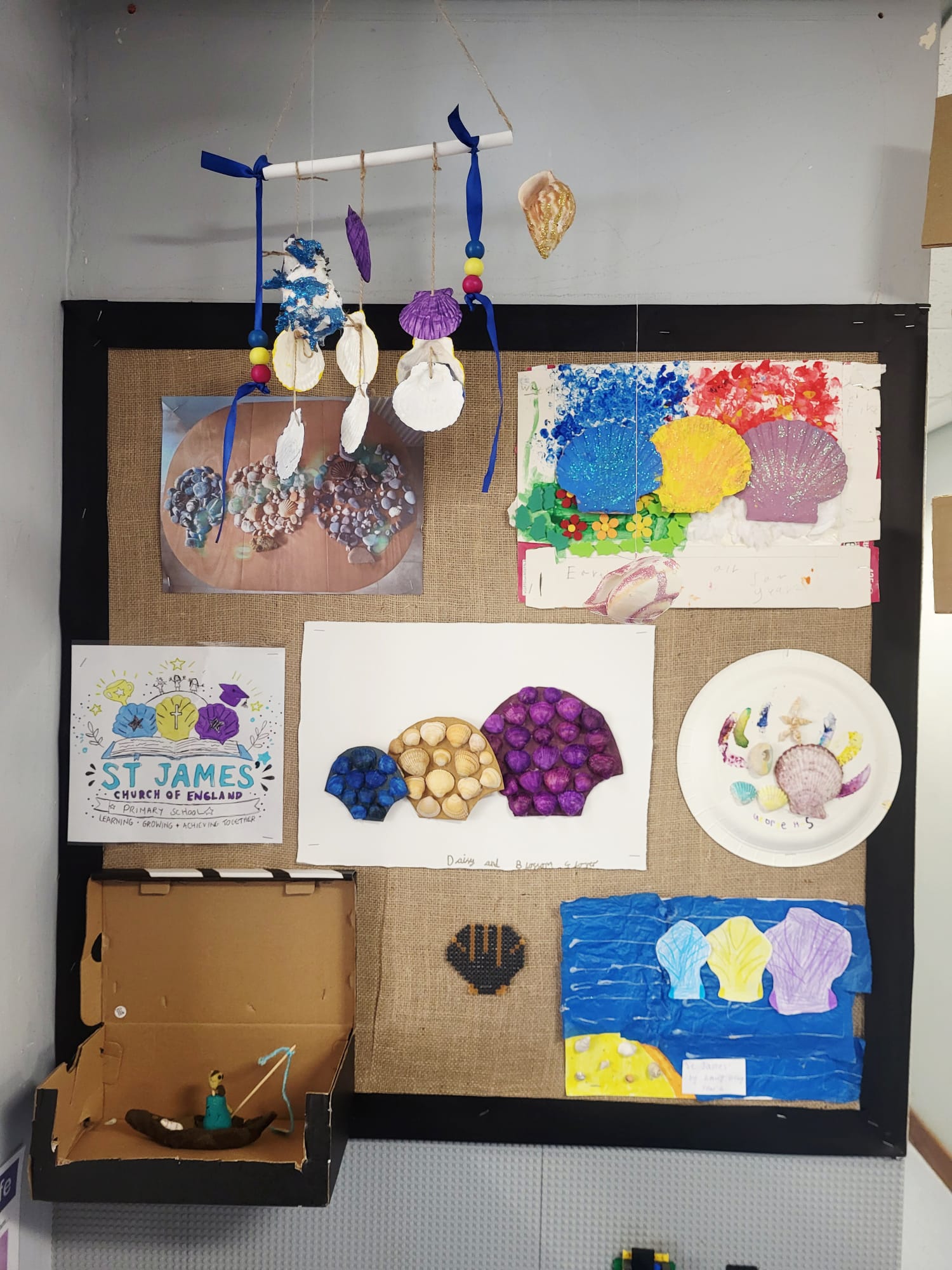
Make sure you check the Class News each week. Since the start of the year, there have been over 28 Class News stories to read across school, from Reception to Year 6!
This week’s message focuses on some specific teaching and learning guides that you might like to check out so that you can support your child at home…
Handwriting
This year, we’ve refreshed the way we teach handwriting. Children have told us that with better handwriting, they feel more confident and proud of their learning! Our Handwriting Guide is easy to follow and a great way to support your child. Check out the guide to letter formation and our three top tips on page 3.
Spelling
We’ve also updated the way we teach spellings in Years 2 to 6. Our Spelling Guide describes how we teach spellings in Key Stage 2, including sequences for teaching different spelling rules and patterns and related lists of spellings to learn.
Feelings First
Last year, some of you attended a Watch Us While We Work session where we showed you a Feelings First session. The feedback from the session was really positive. We’ve prepared this Feelings First Guide to give you an idea of the feelings we cover each half term (page 6) and our simple definitions of each feeling (page 7).
Homework
We’ve made a small tweak to our Homework Guide which reflects a change of routine for children in Key Stage 2: their spellings to learn is now around a two week cycle, with a small test each fortnight.
Relationships and Sex Education
At the start of each year, we like to encourage you to be aware of our Relationships and Sex Education Policy. Later in the year, your child will have Relationships and Sex Education lessons. In those lessons, we’ll talk about anatomical terms and different relationships. However, we might need to use the terms at other times, such as when dealing with incidents of misuse or disrespectful language, and we’ll talk about lots of different relationships at any time of the year, too.
Cooking
Over the course of the year, your child will enjoy three opportunities to prepare food:
- Year 1 and 2: a fruit smoothie, overnight oats, and fruit bars
- Year 3 and 4: egg pot, chopped tomatoes and garlic, and savoury scones
- Year 5 and 6: vegetable and chickpea curry, pasta bake, and bread
We’ve a couple of requests, please:
Most importantly, please alert us to any allergies your child has. We’ll do our best to adapt recipes.
For parents of children in Years 1 to 6, thank you to those of you who contributed towards the cost of ingredients last year. Doing this means:
- we make life easier for you by buying the food in bulk rather than asking for children to bring in their own ingredients
- we can continue to offer this opportunity to learn important kitchen skills
To make sure that we can continue to offer this across the year, please make a voluntary donation. We’ve set up Arbor for quick payments of £6, but you can also call into the office with any donation amount – we’d be grateful for any amount to contribute to costs.
For more about our Cooking curriculum, please check out our Cooking and Nutrition Guide – this includes the food preparation skills children will practise (this is Year B).
All the guides mentioned here (and more) can be found on the purple Learn More pages of our website.
Finally this week… Please remember to update us with any changes to the information we have about you or your child. This includes any changes in health details and contact details.
Compost donations needed!
Our Reception children love playing in the outdoor mud kitchen but we’re running a little low on compost!
If you have any spare bags of compost at home that you would be happy to donate, we would be very grateful!
Thank you for your continued support.
Summer competition
Thank you to everyone who entered our Summer competition – there were some fantastic re-creations of our school logo. It was very difficult for the school staff to decide on the overall finalists. After much discussion, I’m pleased to announce the following winners:
Third place: Samuel

Second place: Cian

First place: Woody and Liyla

Our weekly message: Friday 04 September 2026
It’s been great to see you at the school gates and to welcome the children back to school – and to welcome new children joining us, too. We’ve loved hearing children greet us happily each morning!
Summer competition
Did you enter our Summer competition this year?
Thank you to those of you who did. We invited you to re-create our school logo in some creative way. Today was the deadline to send in a creation featuring our shells logo – we’ll be deciding the winner on Monday.
Attending school
We know the Autumn term can be a time when younger children pick up a bug or two. Check out our Attending School page for advice about when you’re child might be too ill to come to school.
Last year, our attendance figure was 91.9%. Let’s aim for better this year. Watch this short clip (only a minute long) about why attending every day matters in primary school.
Dates
Here’s a list of key events across the year.
For a fuller and up-to-date picture of what’s going on, check out our school calendar.
(Have a look at our weekly Living and Learning theme at the start of each week in the calendar, too – this week, our theme’s been ‘I follow the school rules’ so please talk about these at home.)
A few updates
We’ve updated a some policies recently…
Our Homework Guide includes an update about spellings to learn and a couple of other tweaks (the actual policy on pages 2 and 3 hasn’t changed).
We’ve updated our Positive Relationships Policy to reflect a change in language when adults in school use ‘3, 2, 1, stop’ – check out our new expectations on page 2.
Our policy for Special Educational Needs and Disabilities (SEND) now includes a policy around resources to support pupils (things like fidget objects).
Finally, we reviewed our Uniform Policy in the Summer term, but it might be worth a re-read to check our expectations, especially for PE days.
Our website
As it’s the start of a new school year, we thought it might be a good time for a quick ‘tour’ of some of the key pages of our website.
The Find Out section is there mainly for the key information you need to know about. Particularly useful pages are:
- the Calendar: at the start of the year, we send home a list of key events across the year but for a fuller and up-to-date picture of what’s going on, check out the calendar (have a look at our weekly Living and Learning theme at the start of each week in the calendar, too – this week, our theme’s been ‘I follow the school rules’ so please talk about these at home)
- Policies and Other Points: this page contains lots of information, including our Positive Relationships policies and our Uniform policy – important ones for you to know about
The Join In section describes lots of different ways that you and your child can get involved, from wraparound care and clubs to any job vacancies we may have. There’s information about our Governing Body in this section, too. (On the subject of governors, please contact us if you know of someone who might be interested in becoming a governor.)
The Learn More page is where to go for ways to support your child’s learning. The Class News pages are always the some of the most visited pages – they help to keep you up to date with what your child’s learning. Other pages give you information about different subjects – Reading, Writing, Maths and other curriculum subjects. If you’re a parent of a child in Nursery or Reception, check out the Early Years page, too.
Next week, we’ll talk about our new topic for children in Years 1-6. It’s a History topic – start asking your child now what they’ve been learning in History! In the meantime, have a happy and healthy weekend.
Our Christian value focus this half-term is...
…perseverance.
At St James’ CE Primary School, we learn about Christian values that help us to become well-rounded citizens in society. Each half-term, we have a new Christian value that will be embedded into our collective worship and our reflection areas.
This half term, our Christian value is perseverance.
‘Let us not become weary in doing good, for at the proper time we will reap a harvest if we do not give up.’ (Galatians 6:9)
Endurance is needed when standing firm in the face of any difficulty. It is the special gift that we have when life is difficult or painful that helps us not to give up. Difficulties might include hardship, persecution or scorn, although we hope these difficulties do not arise in our school. We use it more in the context of ‘keeping going’ and ‘not giving up’.
Help at home by talking about and encouraging perseverance…
- How can we show perseverance in school?
- How can we show perseverance in home, or in other situations?
- Who do you know that shows lots of perseverance?
- What does perseverance look like to you?
- Tell me about a time when you showed perseverance
Our last weekly message of the year: Friday 17 July 2026
We’ve reached the end of another happy and healthy school year. This week’s message is a long one, but hopefully the headings will help you to read the parts that matter to you…
Have a happy and healthy summer
As we reach the end of another successful school year, we’d like to thank you for your continued support, encouragement, and partnership throughout the year. Your involvement has played an important role in helping our children be happy and healthy at St James’ CE Primary and beyond.
We’re very proud of all that our pupils have achieved and grateful to our dedicated staff for their commitment and care. Together, we have celebrated many successes.
We hope you and your family enjoy a well-deserved, restful and enjoyable summer holiday, creating some happy and healthy memories together. We look forward to welcoming everyone back refreshed and ready for another exciting year on Wednesday 02 September.
Year 2 teaching
As you know, Mrs Bye will be going on maternity leave in 2026-27. Last week, we were successful in appointing an experienced teacher, Mrs Chan, to cover Mrs Bye on the days she works – Thursday and Friday. Originally from France and then California, Mrs Chan has been working in a nearby school for over a decade. We have arrangements in place to ensure a successful handover.
Junior Leadership Team review of the year
As we approach the end of the school year, we asked our Junior Leaders for some of their highlights…
Kiara, Y5: ‘I enjoyed organising the Easter bake sale. We chose new books for the library with the profits we made. This was someone’s suggestion and we acted on it.’
Ethan, Y5: ‘I’m pleased with how we spent the money raised. A lot of people have said they’ve enjoyed reading the new books.’
Kupa, Y3: ‘It’s been good reading out our class suggestions in meetings and we’ve acted on them by sharing ideas for playground equipment. I’ve enjoyed being in the JLT because we can help the school.’
Freddie, Y4: ‘We had a big discussion about hot food in the after-school club. Miss Beatson has told us that hot food will now be on the menu in September which I’m happy about.’
PTA annual report
A big thank you to our PTA for all the help they provide us across the year. They’ve just released their 2025-26 annual report.
Swimming lessons next year
We’re making an exciting change to how children access swimming lessons.
Currently, children in Year 4 go swimming. With travel included, it takes up a large part of the afternoon for a relatively short weekly lesson.
Next year, we’re installing a pop-up pool! In the Summer term, a purpose-built, temporary swimming pool will ‘pop up’ on the playground. Children in Years 3 and 4 will benefit from an intensive 3 week block of lessons where they will swim for 45 minutes every day with fully qualified, external swimming instructors. There may be time for older children to swim, too. We’re confident this change will mean even more children can learn to swim whilst also saving on learning time lost throughout the year.
We understand this may seem like fewer lessons overall. However, the intensive, daily format has been shown to significantly boost children’s progress. Here’s why:
- Faster skill development: Swimming every day builds confidence and skill without the gap between weekly lessons that often leads to forgetting.
- More time in the water: Without the need for travel, children get more meaningful lesson time.
- Less disruption to learning: A concentrated block avoids weekly interruptions across the year, protecting curriculum time.
- Improved outcomes: Qualified instructors can better tailor lessons to each child’s needs, helping more pupils learn to swim and develop water confidence.
We’re sharing this facility with another school, alternating each year. This means that in 2026-27, we have the pool and then in 2027-28, we’ll have a year off. Across the two year cycle, all children in Years 3 and 4 will benefit.
Look out for more details nearer the time.
The rest of this email has a summer theme, starting with a couple of reminders…
Summer competition
Over the summer holidays, we invite your child to re-create our school logo in some creative way – maybe a painting, a collage, even a mobile.
It could be anything – the only rules are:
- it needs to be ‘display-able’, so we can put it on display along with the other entries
- it needs to show our shells logo in some recognisable way (but the more original, the better
To enter, your child needs to bring along their pieces of art in the first week – no later than Friday 04 September. Entries will be displayed in a St James’ CE Primary shells logo display in school, and there are prizes for our favourites.
Summer savings
This is a reminder of something from a previous message…
The Great British Summer Savings scheme starts next week. Running from 25 June to 01 September 2026, its aim is to help families feel a bit less squeezed this summer.
The scheme includes reduced VAT on days out, including tickets at attractions like soft play, adventure centres and theme parks, children’s tickets for theatres and cinemas, and children’s meals in restaurants. Children aged 5 to 15 in England will also be able to travel free on local bus services throughout August.
Summer Breeze fun club
Join the Breeze team for arts, games, sports, food and…inflatables!
There are four Breeze Healthy Holidays Fund Days happening this summer. Choose from:
- Wednesday 22 July: Shaftesbury Fields
- Thursday 23 July: Millshaw Playing Fields
- Friday 24 July: John O’Gaunts, Rothwell
- Monday 27 July: Whinmoor Warriors Rugby Club
You’ll need to register with Healthy Holidays before they can book. If you’re not already registered, you can do this now. To book visit the Healthy Holidays website and search for the event group name ‘Breeze Healthy Holidays Fun Day’ and select your preferred event from the list.
Summer reads
Stay reading right through summer. Check out these recommended reads, or simply take a trip to a nearby library!
If you do go to the library, look out for Read to the Beat. It’s great opportunity for children to maintain their reading levels during the summer holidays and build on their love of books, which will help them in school and later in life.
And how about some Reading Bingo? Download a printable reading challenge for the summer holidays.

Summer support
Wetherby’s Community Cafe and Advice Hub is open every Friday, 10am to 12noon at St James’ Church Room, Church Street,. Wetherby. It’s a welcoming community space offering:
- free refreshments
- family-friendly activities and toddler area
- information and support
- access to Citizens Advice
- signposting to local services
- toddler area
Wetherby and District Foodbank is available here:
- Barleyfields Community Centre, Wetherby: Tuesdays and Fridays, 10am – midday
- Tadcaster Community Cafe and Advice Hub, The Barn: Wednesdays (term time), 10am – midday
- Tadcaster Methodist Church: Wednesdays (school holidays), 10am – midday
- Wetherby’s Community Cafe and Advice Hub, St James’ Church Room: Fridays, 10am – midday (food parcels aren’t available, but you can obtain a referral plus support from a range of services)
If you need emergency help with food, ring 07840 455 725 and leave a message.
Free Family Activities and picnic food for the summer holidays
Wetherby and District Foodbank is running a series of free community events during the summer holidays:
Market Scavenger Hunt & Picnic Giveaway: Families can take part in a free scavenger hunt around the market, with the chance to win a picnic hamper.
Thursday 23 July 2026 – Wetherby Market Square, 10am-2pm
Thursday 20 August 2026 – Wetherby Market Square, 10am-2pm
Community Picnic Events: Free food, refreshments and activities for local families.
Friday 24 July 2026 – Community Café & Advice Hub, St James Church Room
Friday 21 August 2026 – Community Café & Advice Hub
For more information contact: [email protected]