Art – Stamping

This week, in art, we’ve been exploring printing and stamping. We used paints and a variety of found objects to experiment with shape, texture and pattern.

The children loved seeing how everyday items could make such interesting prints. There was lots of excitement (and a few colourful hands!) as we mixed colours and layered our designs.

Everyone showed great creativity and imagination!

Help at home by using some ‘found objects’ to create some art of your own. We’d love to see the results!
Topic – Maps

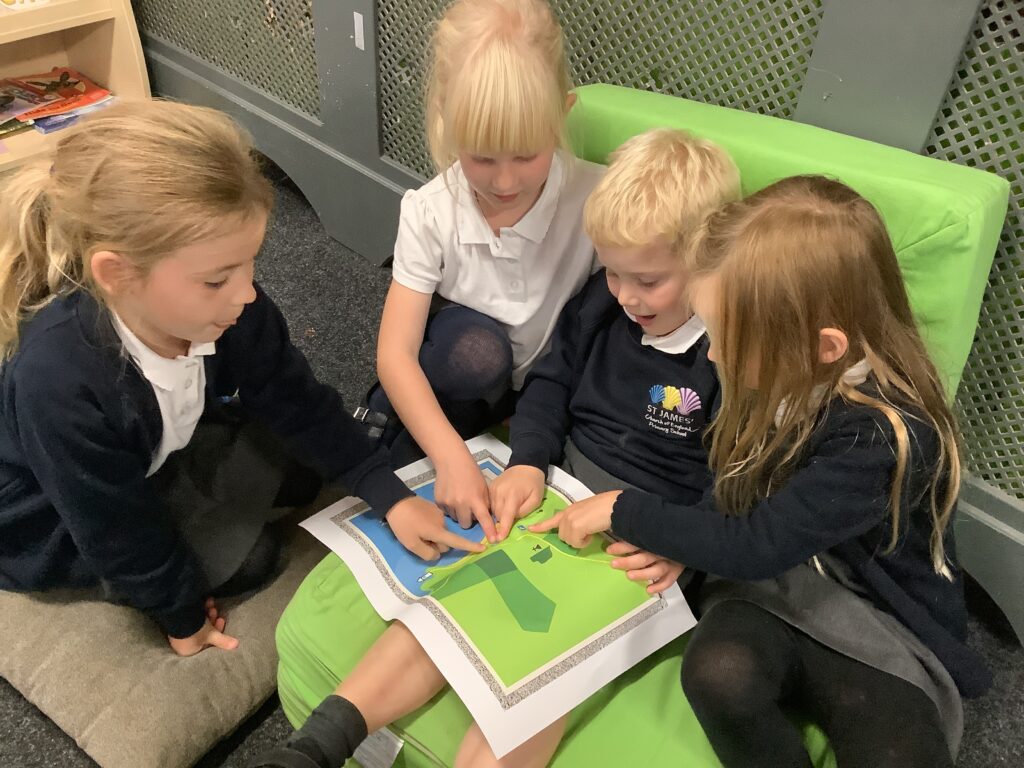
This week in Geography, we’ve been learning all about maps.

We discovered that a map is a drawing that helps us find where we are or where we’re going. We learned that maps are usually drawn from an aerial view – as if we’re looking down from above.

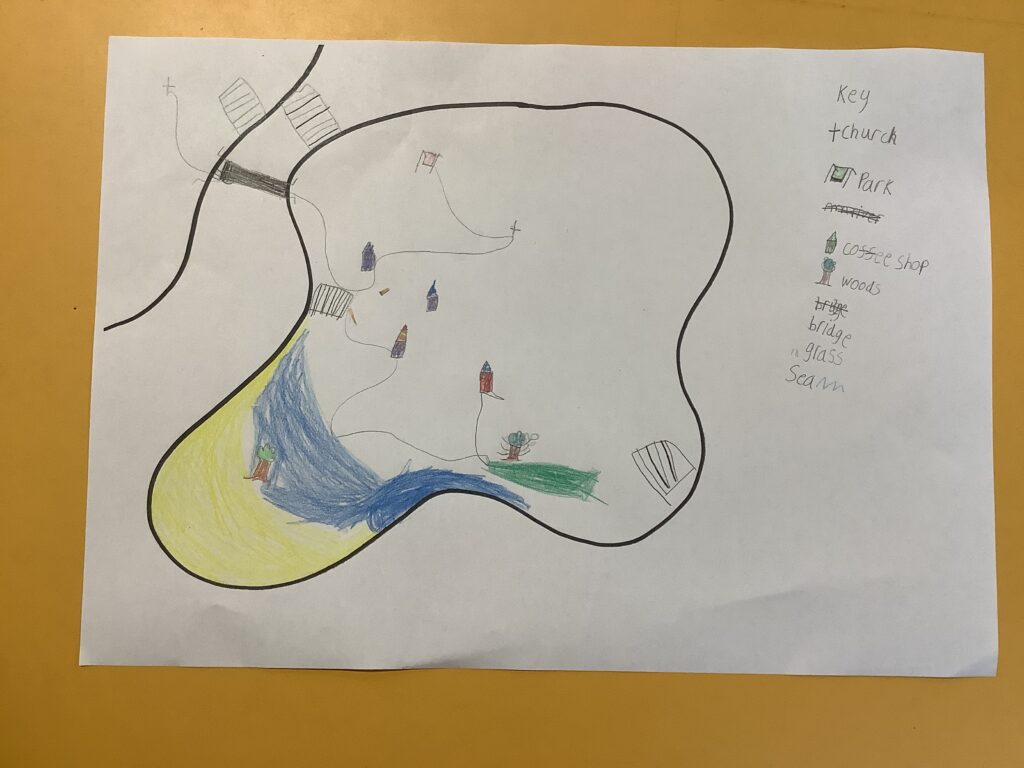
We explored how maps use symbols to show places like parks, shops and churches, and how a key helps us understand what each symbol means. The children enjoyed using simple maps to find places of interest and talk about what they could see.

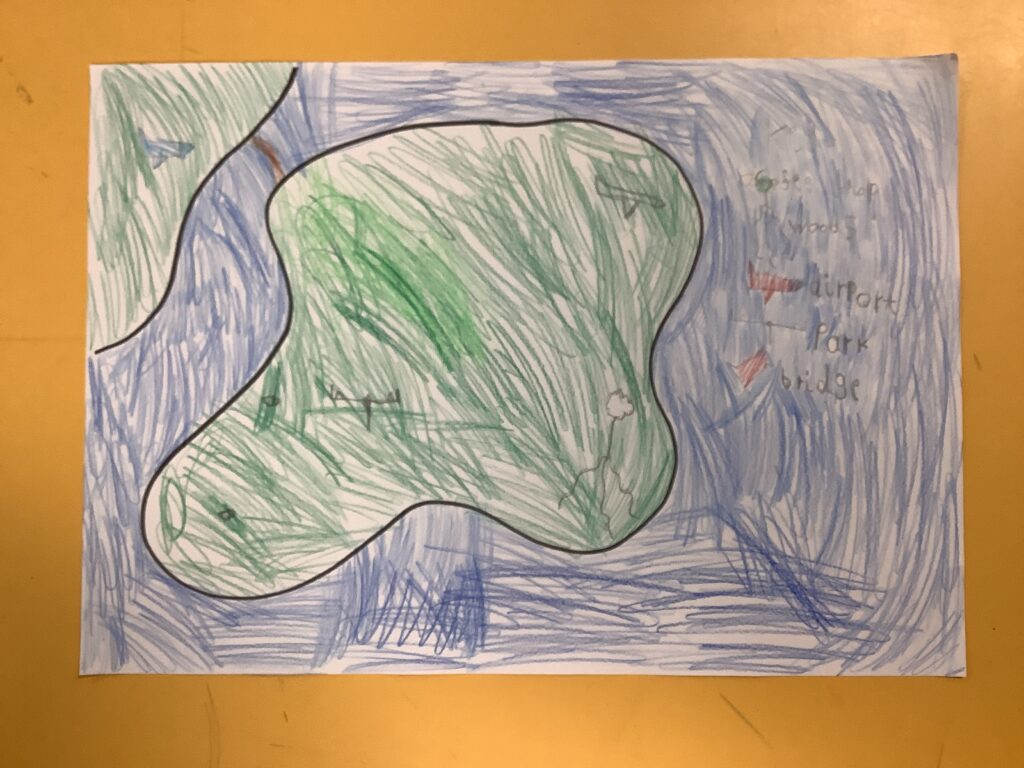
Later in the week, we created our own maps, adding human and physical features using symbols and creating a matching key.

Staying Safe
We also talked about what to do if you ever get lost – stay where you are so an adult can find you.

Help at home

  • Go on a walk and look for things you might find marked on a map (shops, parks, post boxes).
  • Try drawing a simple map of your journey to school or a favourite park.
  • Look at a map or atlas and find places you’ve visited.

Maths – Part-part-whole models

In maths, we’ve been learning about part-part-whole models.

A part–part–whole model shows how a number (the whole) can be split into two or more parts.

For example:
If we have 5 apples, we could show that as 3 and 2.

3 is a part.
2 is a part.
5 is the whole.

Why are part-whole models useful?

  • They help children see number relationships clearly.

  • They build understanding of addition and subtraction.

  • They encourage children to talk about numbers.

    “There are 5 altogether. 3 needs 2 to make 5.”

We’ve been using real objects, pictures and numerals to show different ways to make the whole.

The children have practised describing what they see, helping them to understand that the whole number stays the same, even when split into parts.

Help at home by using everyday items to make different groups and talk about how they combine to make the whole.

Reading – Hermelin

This week in Year 1, we’ve been reading Hermelin: The Mouse Detective by Mini Grey. We began by looking closely at the front cover and reading the blurb, then made some fantastic predictions about what the story might be about. After reading, we shared what we liked and disliked. The children loved Hermelin’s clever detective work and the way he helped everyone in the street!

The children had some brilliant discussions and used lots of great vocabulary to explain their ideas.

Help at home

  • Ask your child to retell the story of Hermelin in their own words.

  • Encourage them to look for clues in pictures or text when reading other stories, just like a detective!

  • Visit your local library and see if you can find other books by Mini Grey.

Maths – Groups of objects

In maths this week, we’ve been learning about what it means to have a whole group.

  • First, we looked at trays of cakes. If all the spaces are full, we know we’ve got the whole group.

  • Then, we noticed that a whole group doesn’t have to look exactly the same. A box of eggs with different colours is still a whole group if none are missing.

  • Next, we learned about not whole. If something is missing, like a cake from the tray, it isn’t the whole group anymore.

The children have been brilliant at explaining their thinking using stem sentences:

“This is a whole group of ___ because…”
“This is not a whole group of ___ because…”

This is a whole group because all the seats have children sitting in them.

There’s 1 missing. It’s not a whole group.

Help at home by exploring groups of objects:

  • At the table, ask your child if the cutlery is a whole group or if something is missing.
  • Look in the fridge: is the egg box full? If not, how many are missing?
  • When tidying toys, count if you have the whole set.

Reading – The Enchanted Wood

In reading, we’ve been enjoying Enid Blyton’s The Enchanted Wood. We’ve read the first two chapters and met Joe, Beth and Frannie as they moved into their new home near the mysterious wood.

The children have loved imagining what it might be like to discover such a magical place. We’ve been busy making predictions about what could happen next:

  • Who might live in the wood?
  • What secrets will the children uncover?
  • What adventures might be waiting at the top of the Faraway Tree?

Everyone has been eager to share their ideas and it’s been wonderful to see such creativity and excitement in our discussions. We can’t wait to read more and find out what happens next.

Help at home by discussing the story with your child. Can they summarise what has happened so far? Help your child to make some connections – does the story remind them of something they’ve done, seen or read before?

Living and Learning – I use good manners

This week in Living and Learning, Year 1 have been thinking about good manners.

Manners are the kind words and actions we can use to show respect and kindness to others. They help us to treat everyone fairly and link to the British value of respect and tolerance.

We talked about how it feels when people are polite or impolite. Being polite makes everyone feel happy and cared for but being impolite can make people feel sad or left out.

The children had lots of brilliant ideas about good manners:

  • Saying please and thank you

  • Being kind and helping people

  • Holding doors open

  • Sharing

  • Saying good morning and giving a smile

  • Being welcoming to others

We agreed that good manners help us to get on with each other and they make school a happier place for everyone!

Help at home by thinking of a time you used good manners today. How did it make you and others feel?

Topic – Capital Cities of the United Kingdom

This half term, in topic, we’re geographers. A geographer is a type of scientist that studies the world around us. They look at the land and the people on it.

  • We live on a planet called Earth.
  • We live on a continent called Europe.
  • We live in a country called England.
  • England is a part of the United Kingdom – a union of 4 countries.

This week, we’ve been learning about the capital cities of the United Kingdom.

A capital city is an important city which is usually where the government works (they’re the people who make rules and decisions).

After learning about the capital cities of the United Kingdom, the children were tasked with locating them on a blank map and labelling them. We’ve got some impressive geographers in Year 1!

“Belfast is the capital city in Northern Ireland.”

“I’ve been to London.”

“Cardiff is in Wales.”

Help at home by:

  • Map Hunt Find the capital cities of the UK on a map – perhaps in an atlas or on Google Earth.
  • Build It Can you build any of the capital cities’ landmarks using blocks or LEGO?
  • Travel Talk Have you visited any of the capital cities of the United Kingdom? Tell you child about your trip. What did you see?

Philosophy Friday – What makes a good school?

Philosophy is thinking deeply.

Every Friday, we start our day with some time to wonder and ponder.

We’ve a different question each week – there’s no obvious right/wrong answer and no underlying moral message. All children are given the opportunity to contribute their ideas and give reasons for their thoughts.

The children had some lovely responses. A good school is a place where:

People are kind to each other.
– Imogen

You can have fun with your friends.
– Ella D

You can learn about numbers.
– Darcey

People share.
– Arlo

Help at home by discussing this week’s Philosophy Friday question with your child.

Science – Human Body

In science, we’re learning about the human body. So, what makes a human?

Humans are a type of animal made up of lots of important parts. We have brains for thinking, hearts for beating and tummies that rumble at 11:45. We tried to name as many body parts as we could think of. The children really impressed me with their knowledge!

We worked like scientists by carrying out an investigation to answer the question: Do older children have bigger feet?

After making some predictions, we lined our feet up in birthday order and compared. We were surprised to find that the answer to the question was only sometimes. Science can be full of surprises!

Help at home by discussing parts of the human body with your child. Play Simon Says using body parts to help them remember some of the tricky ones. Re-create our investigation at home by lining up in birthday order and compare foot size.