This week’s message (Friday 11 March 2022)
This week’s message comes from Mr Wilks, who leads on Science and Foundation subjects. Each half-term, Mr Wilks talks about the current whole-school topic – this time, it’s about Computing…
What do we mean by topics?
Topics are the vehicle for delivering much of the learning in the foundation subjects (eg history, art, geography, DT). Each half-termly topic has a ‘driving’ subject – the main focus for teaching pupils the knowledge and skills they need to succeed in life. The driver changes with each topic to ensure a broad and balanced curriculum.
Although the learning in each topic is provided by the driving subject, there are opportunities for enrichment through other subjects. For example, learning in an art topic may be enriched by geography learning about where an artist was born and lived.
Read more about the intent, implementation and impact of our topics.
What is this half-term’s topic?
This half-term, it’s Computing. Your child will develop their knowledge of computers and computer programming.
Computer programming is super. Creating games, animations and solving real world problems is fun, encourages creativity and is challenging! Importantly, the skills children will use and develop are transferable to other subjects and areas of life. For example, the concept of decomposition in programming is concerned with breaking down a large task into smaller chunks. This concept could be used when writing a story, solving a maths problem or tidying a particularly messy bedroom! Debugging is the skill of identifying and fixing an error in a program. It requires systematic, objective thinking and plenty of resilience.
Each phase has age-related specific knowledge, skills and vocabulary that they’ll learn, use and apply across the topic. See pages 15-18 of the curriculum statement document.
Years 1 and 2
Children are learning about how technology is used beyond school in our homes and all around us. They’re considering what a computer is and isn’t.
In programming lessons, they’re being introduced to algorithms and will learn about how they need to be written in the correct sequence.
They’re creating their own algorithms in ‘unplugged computing’ lessons and will debug errors in their own and others’ algorithms. Next, they’ll plan and create their own unplugged game where they have to create an algorithm to move a character from one place to another using positional language.
They’ll then use the same concepts using Beebots – simple robots which can be programmed to move and turn. Finally, it’ll be time to create their own game using Beebots.
Years 3 and 4
Children will reason about what exactly makes a computer a computer. Is a games console a computer? Is a TV a computer? Is a bedside lamp a computer? Next, they’ll learn about inputs and outputs and identify different examples of them in everyday technology.
It’s then time for programming. Like Key Stage 1, they begin with some ‘unplugged computing’. They’ll create and debug unplugged programs which use sequence and repetition before they then create their own unplugged game which will require some decomposition. Next, it’s time to program on a platform called Scratch Jr. It’s a free app available on most devices and will allow children to develop and refine their understanding and use of concepts like repetition and sequence. Finally, they’ll create their own game on Scratch Jr using all of the skills they’ve learned over the topic. They’ll to be creative to plan and design their own game, whether it’s a maze game or a simple platform game.
Years 5 and 6
As in Year 3 and 4, children begin the topic by reasoning about what makes a computer a computer. They’ll then learn about what a computer network is and that the Internet is an enormous computer network. In programming lessons, they’ll use Scratch to gain a deeper understanding of concepts like sequence and repetition before learning about selection and variables. Some of this vocabulary may sound alien to you. However, before the end of the topic, your child will be able to tell you what they mean and give examples of how they’ve used them in their projects. Some of the projects your child might make are:
- a Spirograph style drawing animation with some potentially psychedelic visual effects!
- a chatbot program which will ask you questions and decide if your responses are correct or not.
- a times table quiz program that will test you on randomly selected times table questions within a set time limit.
How can you help?
Talk to your child about what they’ve been learning in class. The class news page of the school website is a good place to go to find out more about what children are doing.
The school library and local libraries have lots of books about coding and computer games – your child will be able to borrow the books to develop both their reading skills and computing knowledge.
Finally, try programming with your child. There are loads of programming apps and software available to download, often for free…
Key Stage 1
- Daisy the Dinosaur (Apple only)
- Beebot
- Tynker Junior
Key Stage 2
- Lightbot
- Tynker
- Scratch Jr
- Scratch
Super learning!
It’s been another busy week in the Reception classroom.
The fantastic learning just keeps coming!
Literacy
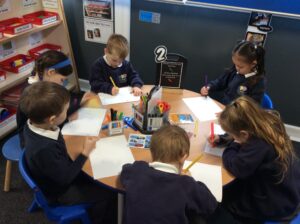
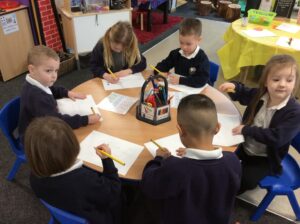
This week, we continued to look at The Hundred Decker Bus by Mike Smith. The children were amazing at retelling and remembering the key events. For the writing chilli challenge, they had to design a new deck and write a sentence about their deck. I stuck all of the children’s decks onto a roll of paper and the children came in on Thursday and saw their very own 30 decker bus displayed in their classroom.
Click here to view our bus.
Living and Learning
This week, our living and learning session was all about recognising the importance of personal hygiene including handwashing.
I asked the children, “How do we keep ourselves clean?”
LW – You get a shower and use soap.
BI – You have a bath.
EK – We need to brush our teeth.
OR – We brush our teeth in the morning and at night.
FH – We wash our clothes.
We based yesterday’s session on handwashing. Before doing our experiments, we started by thinking about why and when we wash our hands.
First, we had a go at the germ experiment, We used soap, pepper (germs) and water to see how important it is to wash our hands. The children were amazed when they watched the germs (pepper) move away from the soap on their fingers.
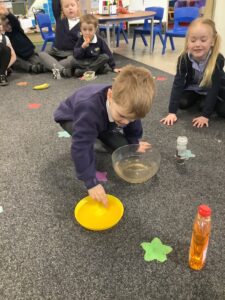
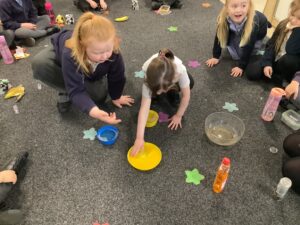
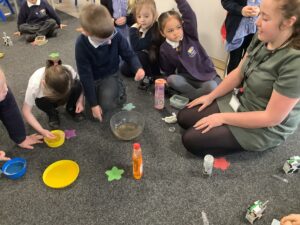
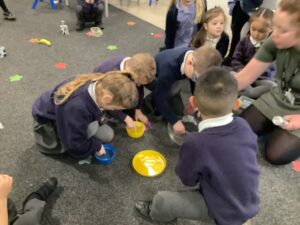
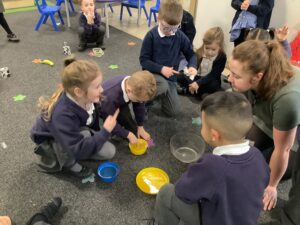 Then, we had a go at the mouldy bread experiment.
The first child was asked to rub their hands on a piece of bread. The second child was asked to wash their hands for 20 seconds and rub their hands on another slice of bread. Next week, the children will check and observe the bread daily to see if their predictions were right.
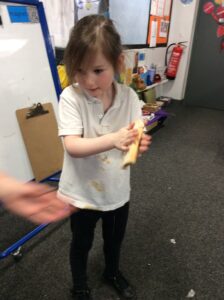
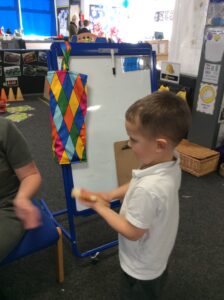 Click here to watch us sing our new washing hands song!
Here are some more highlights from this week…
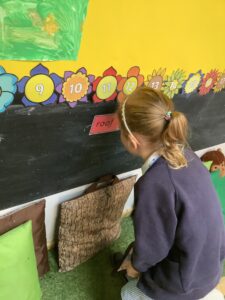
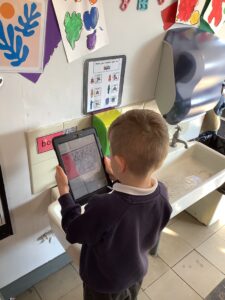
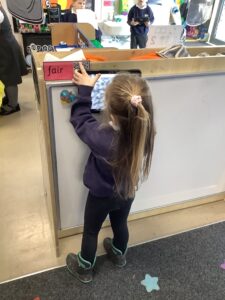
Reading phase 3 words and scanning the QR code to see if they got it right.
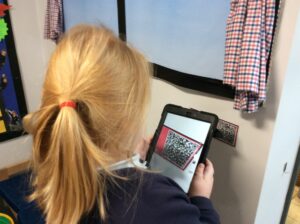
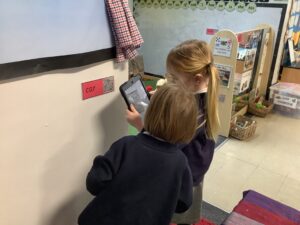
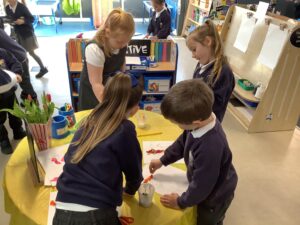
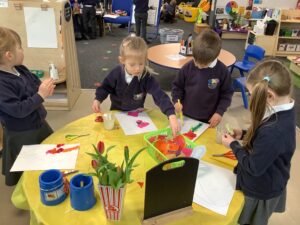
Using the tissue paper to make a picture of the tulips.
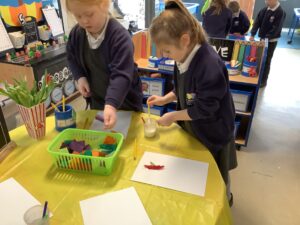
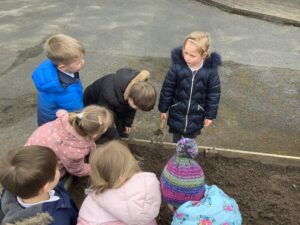
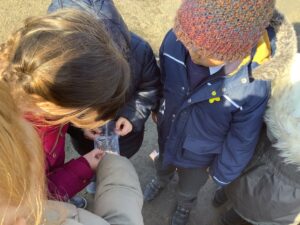
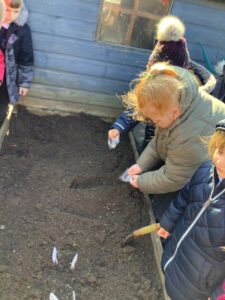
Planting vegetable seeds.
 Reminders!
Please make sure you write in your child’s reading record when you’ve read at home. It is important we see how your child is doing with their reading at home.
Please make sure you return the farm visit slip by Monday 21 March.
11 March 2022
Y1: was, we, were, where, you, your
This week, Year 2 have been looking at plurals by adding s and es to words and -es to nouns and verbs ending in -y. The y is changed to i before -es is added.
Y2: thanks, spends, catches, rocks, flies, tries, replies, copies, babies, carries.
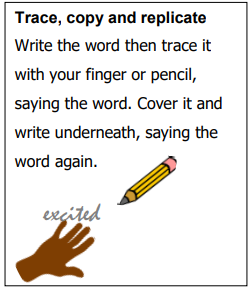
11 March 20
This week, we have been learning about the suffix –fer. Please learn the following spellings for a test on Thursday 17th March.
- refer
- referring
- referral
- prefer
- preferring
- preferred
- transfer
- transferred
- offering
11th March 2022
This weeks spelling focus on the suffix ful/less. We will be including both suffixes in our test next week.
though/ful/less
care/ful/less
harm/ful/less
use/ful/less
hopeful/less
rest/ful/less
fear/ful/less
fear/ful/less
doubt/ful/less
Year 4 have had a very busy week!
We have had a fantastic week of learning in Year 4!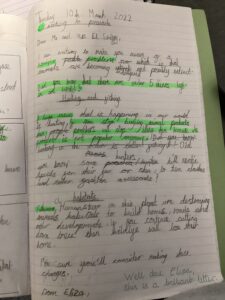
In writing we learnt about the features of good persuasive writing. We then wrote some brilliant pieces of persuasive writing about why people should change their actions to prevent animal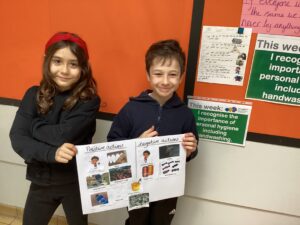 species from becoming extinct.
As our living and learning has been based on personal hygiene, we thought about the importance of oral hygiene and considered everyday actions and the impact that these can have on our teeth.
11 March 2022
This week’s Talk Time poses a moral dilemma and makes links to our current computing topic.
Playing computer games is bad for your health.
We suggest approaching this Talk Time with an open mind. You may already have strong views on this but it’s important to consider both sides of an argument before reaching your conclusions.
Check out these R2s to help you with your discussions at home:
- What are the health benefits of playing computer games?
- Remember that mental health is crucial to being a healthy person.
- How does playing computer games negatively impact on your health?
- How could this impact on your physical health?
- Is gaming always an enjoyable experience?
- Decide which argument is the strongest.
- This might be the side with the most points to back it up.
- You might consider some points to be more important than others.
- You may not agree with people you speak to – that’s okay!
After the discussion with friends and family, what conclusion do you reach? Do others around you agree?
Year 2 maths : multiplication and division
The year 2s have begun to learn about multiplication and division and are loving it! We use real objects and pictures, linking this to calculations. Talk about what each number represents in a calculation.


Help at home by encouraging your child to play on Times Tables Rockstars and watch BBC Supermovers videos.
Living and Learning: health and prevention and Science
Our Science and Living and Learning lessons have been all about microbes, handwashing, health and preventing illness this week.
In Science, we have talked about how microbes can be harmful but also how some can be good for us. We made microbes out of play-dough deciding whether they were virus, fungi and bacteria.

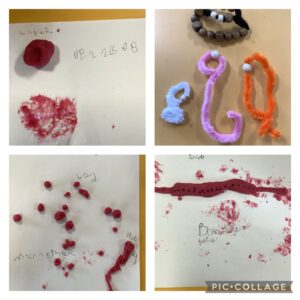
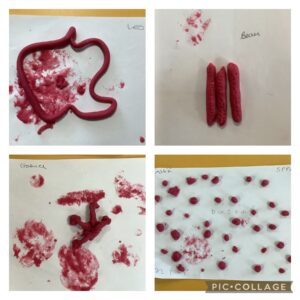

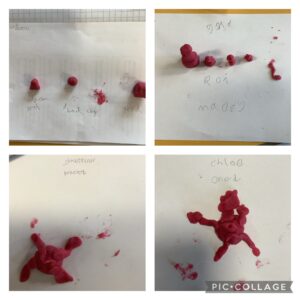
Washing our hands is really important. All the children could all talk about this, with our experiences of Covid-19!
Maths fluency – new app
The children have been using a new app we have on the iPads called White Rose 1 minute maths (it’s free to download).
This is a fantastic app to use alongside Numbots in order to support your child with their maths fluency – knowing number facts instantly.