
Living and Learning – identity
This week, in Living and Learning, we have continued to look at identity. Our statement is ‘I respect my communities and other communities’.
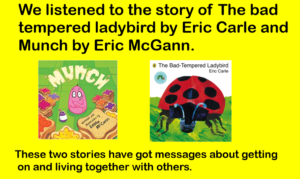
After we had listened to each story we came up with ideas on how to finish the follow sentence.
We can live well together with others by…
“Paying each other compliments,” said Shae.
“Sharing and take turns with each other,” said Elara.
“Being kind and loving to each other,” said Isla.
“Caring for our friends, family and pets,” said Emily.
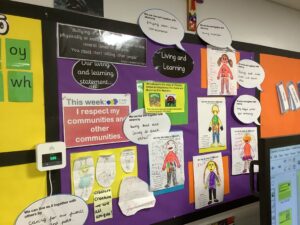
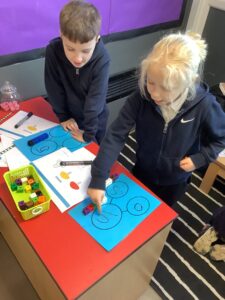
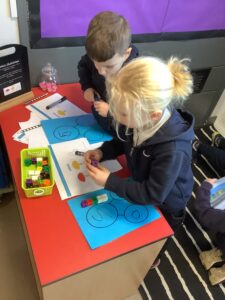
Partitioning number 0-5
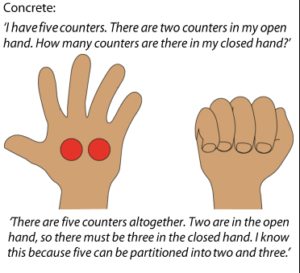
Year 1 have been partitioning into two and three parts. We have looked at the number bonds 1 – 5 and became confident at splitting it into 2 parts.
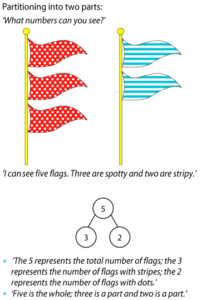

We have also looked at finding a missing part when one part and the whole is known.

28 January 2022
This is the new list of spellings. Write them in your best handwriting. Remember that ascenders go to the top of the line and descenders go under the line. If you’re in Year 2, try to join your letters.
Year 1: Monday, Tuesday, Wednesday, Thursday, Friday, Saturday, Sunday
Year 2: half, hold, hour, improve, kind, last, many, mind, money, most
28 January 2022
Spellings this week again focus on specific prefixes. The focus this time is on un- and ir- . Please learn the words for a test on Thursday 03 February.
- unavailable
- unfamiliar
- unnecessary
- impractical
- impossible
- immature
- illegible
- irregular
- irreplaceable
28 January 2022
There’s a moral theme to this week’s Talk Time.
It is a waste of our time to learn about the past as it has already happened and we can’t change it.
This is a very topical statement given that we’re currently in the middle of a history topic. You may already have an opinion on this but it’s always worth pausing to consider a range of viewpoints.
This week’s R2s will help you to provide a balanced argument before you reach a conclusion:
- What are the reasons for (the pros) learning about the past?
- What are the reasons against (the cons) learning about the past?
- Reach a decision. Is it valuable to learn about past events?
- One list may have more points than the other.
- Some points have a greater importance than others.
One way to approach this Talk Time is to have a debate with people in your household. This will not only help you generate ideas but also practise a range of oracy skills. The last half term’s focus was building on the views of others and reasoning. When someone raises a point that you’re in agreement with, use one of the following phrases to start your response:
- I agree with you because…
- That’s a good point. I also think that…
- Furthermore, I’ll add that…
On the other hand, you may disagree with a point made by a family member. When that’s the case, it can be hard not to interrupt them. The oracy focus for this half term is turn taking. To be respectful of others’ opinions, wait until a person has finished speaking and then respond using one of these sentence starters or one of your own:
- I hear what you’re saying but…
- That’s a good point. However…
- I take your point but…
Year 2 Maths
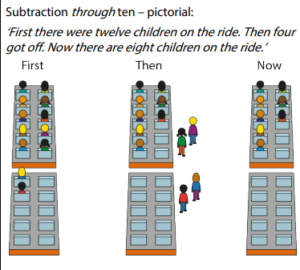
In Maths, Year 2 have been learning two different subtraction methods.
How to subtract two numbers that bridge through ten.
How to subtract two number that bridge from ten.
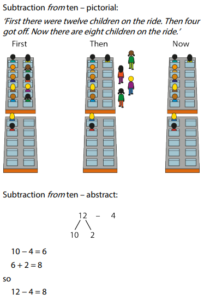
We then used ten frames and counters to model the story and compare the two methods.
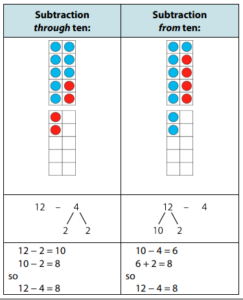
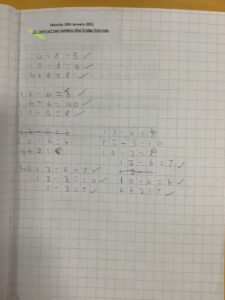
When they were confident with verbally telling the story the children had a go at writing some subtraction sentences, using the two different methods.

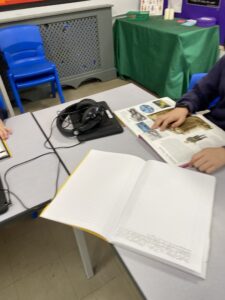
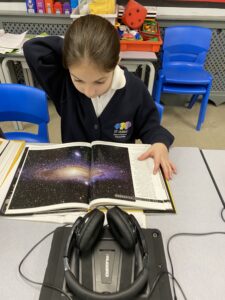
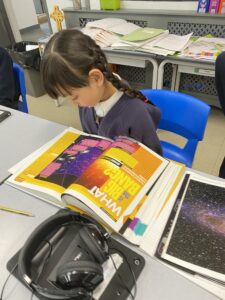
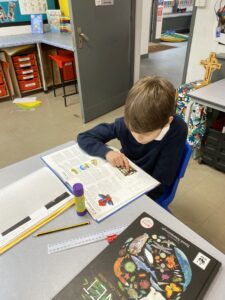
Exploring non-fiction books
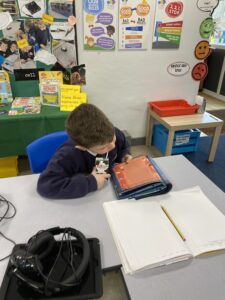
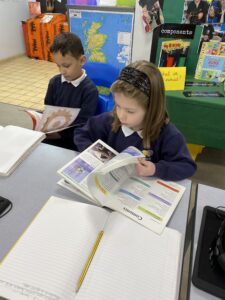
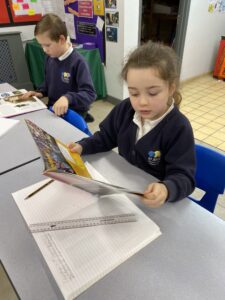
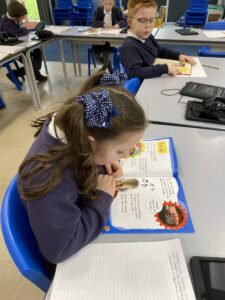
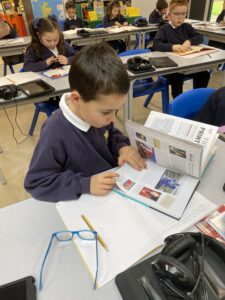
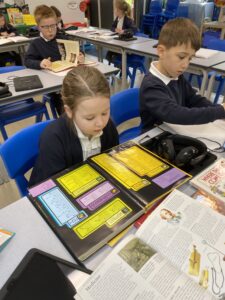
Today, the children were exploring non-fiction books. We looked closely at some books and we noticed that non-fiction books are structured in different ways.
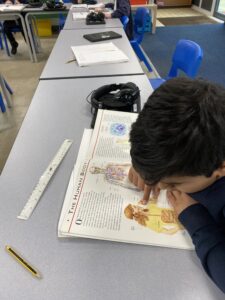
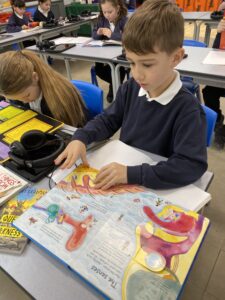
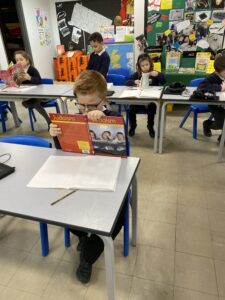

The children examined the contents page, the index and the glossary.
Ask your child how they can use a contents page effectively.
Can they tell you what a glossary is?
How is an index helpful?
Fab feedback!
At St James’ CE Primary, we’re always keen to keep getting better. With this in mind, it’s helpful to invite people from outside our school and our federation to evaluate what we’re doing. A couple of weeks ago, we invited some advisors from the Diocese into school. Here’s a sample of comments following the visit.
- “Parents spoken to are unanimous in their view that the school provides a great education for their children… Speaking to parents of reception age children… they are extremely appreciative of the way their children have settled, made friends and are enthused by their learning.”
- “On multiple occasions parents said, ‘We don’t have a bad word to say about the school’.”
- “At the start of the day, pupils, including those accessing wrap-around care, settle quickly to well-established routines.”
- “Pupils behave consistently well, including at breaks. They say the school is supportive and that they get along together well.”
- “Staff want to work here. They feel valued and cared about…”
Thank you to the parents who spoke with the advisors and for your kind words!
Alongside comments such as there, the advisors made suggestions for what we might do even better. Miss Beatson and I are already working on these.
English – squashed sentences
In half-term, I went to the cinema I saw Early Man it was great!
In this example, there are actually three ‘chunks’ (clauses) that all make sense and need to be split up (using a full stop or a dash or a semi-colon):
In half-term, I went to the cinema. I saw Early Man – it was great!
The sentences could also be joined with a conjunction:
In the half-term, I went to the cinema and I saw Early Man – it was great!
This week’s bible story
Moses: Exodus 20.1-17
Moses is one of the great biblical heroes and is revered by Christians, Jews, and Muslims. There are many stories about this great and inspirational leader, but one of the things that we most associate with Moses is the Ten Commandments. The ten commandments are ten instructions about the way people should live if they are to be happy and live together in peace.
Read the story of Moses and the ten commandments.
Moses tried to keep the people’s spirits high and led them on through the desert until they came to the Oasis of Sinai. Here, there was water and food and they could set up their tents for a while. It was on Mount Sinai that God gave Moses a list of rules about the best way to live.
Reflection:
The first three commandments are about loving God, but the others are about loving other people. The world would not be a good place if everyone just did whatever they felt like doing all the time. If there were no rules, people could do bad or unkind things and get away with it. Rules are important so that we learn about what is right and wrong, good and bad, helpful and unhelpful. Rules are there for a reason: to help us stay safe.
In the New Testament part of the Bible, Jesus spoke about a new commandment that has two parts. He stated that people should love God and love others. How could we do that today?
Prayer
Dear God,
Help us to see that rules are there to keep us safe and happy.
Help us to love other people and to act in a way that shows care for them.
Help us to follow the best ways.
Be near to us when we find it difficult.
Guide us to live together in peace and harmony.
Amen.