
Cross Country Finals!
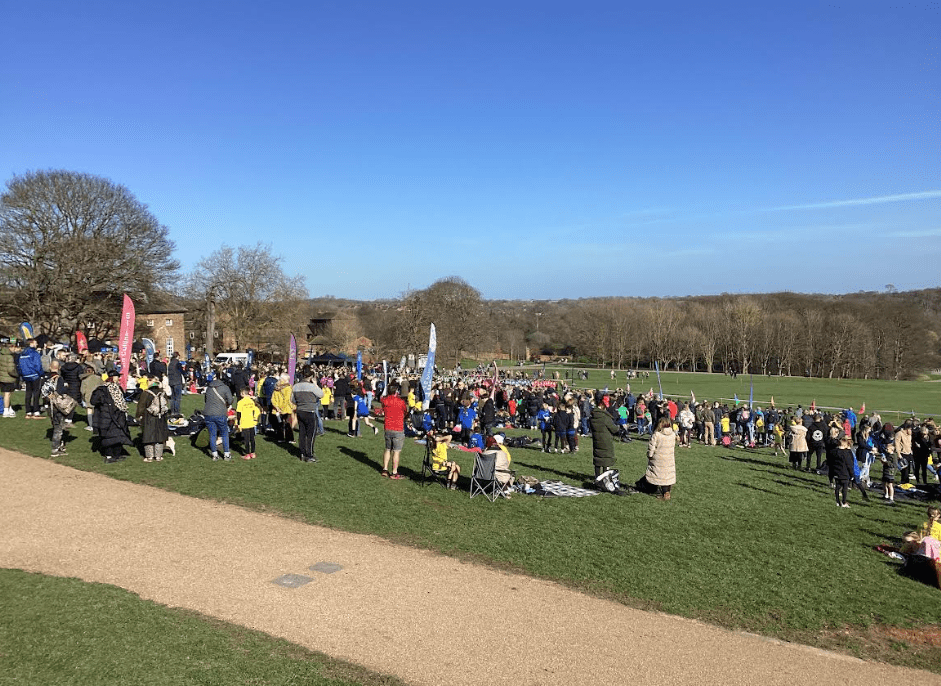
On Tuesday, two of our Key Stage 2 children represented Leeds at the West Yorkshire cross country final at Temple Newsam in the glorious sunshine.
We are very proud of our runners who raced in tough, competitive conditions, with the best runners from across West Yorkshire. They both put in 100% effort and were a great support for each other. The children should feel proud of competing at this level.
Our two runners managed to finish in 56th (out of 141) and 22nd place (out of 151) – a fantastic achievement for both.
Thank you to parents who helped with transport and supported at the event.

Computing
In Year 6, we’ve really enjoyed the first week of our new computing topic. As part of this week, we’ve learnt about how search engines work. We found this video useful:
We were happy to discover that school filtering blocks content deemed inappropriate: this is done to keep us safe online whilst at school.
We have also been learning about logical reasoning.
Logical reasoning means thinking step by step to figure something out. Computers use logical reasoning by following instructions to make decisions and solve problems.
The children then used logical reasoning to solve sudokus. They were able to look carefully at the clues, eliminate what cannot be correct, and choose the only answer that makes sense. We knew this was NOT a guessing game. We were able to prove why each number belongs in a particular place.
Help at home – try solving sudokus together at home. Can your child explain why a number should go in a certain place?
Writing
Over the next few weeks, we will be writing a narrative using the video ‘Francis’ as its stimulus.
https://www.youtube.com/watch?v=l9xX6lQ_gdY&t=35s
This film is perfect at building tension: the narrator uses pauses and varies the speed at which he speaks to build the suspense. As well as speech used to create tension, the music also plays a key part in creating suspense.
Help at home: Watch the video with your child with and without music. How does this alter the tension created?
Safer Internet Day
LO: I can critically consider sources of online information
During this lesson, we learnt some new vocabulary associated with staying safe online:
- Disinformation – false information shared on purpose
- Misinformation – false information shared by accident
- Hoax – false information made to deliberately deceive
(to help us remember, we linked disinformation with being dishonest and misinformation with mistake).
We read four news articles and shared a WhatsApp message with information about one of more of the stories. The articles were false. I knew the information was false (disinformation) whereas the children were unaware that the articles were hoaxes (misinformation). We highlighted how easy it was to be deceived and share something that was ‘fake news’.
We enjoyed watching the following clip which was released as an April Fools in 2009:
https://www.youtube.com/watch?v=9dfWzp7rYR4
LO: I know why it’s important to check with a trusted adult before sharing personal information online
During this lesson, we spoke about personal data being information about us or our activities (name, location, age/date of birth, phone contacts, photographs, likes/dislikes and/or habits)
The apps and websites we use collect our personal data. This article is worth reading regarding personal information:
https://www.bbc.co.uk/bitesize/articles/zwbq7ty
We also watched this short video about why apps and website want your personal data:
https://www.bbc.co.uk/teach/articles/zpvctcw
Help at home – revisit the links with your child. Can they talk to you about how to stay safe online? Why is it important to speak to a trusted adult? Who are their trusted adults?
Science – thermal insulators
In science, we’ve been testing materials based on their ability to insulate heat. We did this because we received a letter from King Charles asking for a hot cup of tea. We tested three materials: tin foil, fabric and polyester wadding.
During the testing, we worked safely and sensibly, ensuring we recorded results accurately. Once we had completed the testing phase, we presented our results in the form of a line graph.
There were many scientific elements of this lesson that were important to consider: independent, dependent, controlled variables, working safely and ensuring we tested fairly.
Help at home – speak to your child about the experiment they carried out. Can they tell you which variable was the independent/dependent/controlled variable? What did they find? Can you replicate the experiment at home?


Reading records
It has been great to see that children are reading at home with an adult and having their reading records signed. Some of the work completed in reading records is fantastic! Children have been really creative and have been completing pieces based on the work we have been doing in class; demonstrating their enjoyment of the texts covered in school.
Here are some examples of work completed in reading records over the last two weeks:


Help at home – please aim to hear your child read at home on a weekly basis.
Living and Learning
I know the importance of the emergency services.
Our children were incredible at naming all the emergency services (police, ambulance, fire service, coastguard, mountain rescue and lowland rescue) during our Living and Learning lesson this week. We know that we can call either 999 or 112 in an emergency.
We watched an array of videos that helped us to understand what to do should someone we know get injured and require medical help. Afterwards, we then watched a short video about what happens when we make an emergency call and what questions to expect. It was at this point, we spoke about the importance of knowing our full home address. The children found this useful; we made it clear that this isn’t something that happens regularly but it’s good to be ready (which is one of our school rules).
Help at home – does your child know their full home address?
Maths
In maths, this week, we’ve been delving a bit deeper with our division. After much practice and head scratching, I feel our Year 6 have (dare I say) ‘mastered’ long division by two-digits. I am very proud of their understanding and their perseverance with this.
We have also been learning about how to divide with a remainder and a decimal quotient.


The children have then applied their new learning and began to answer reasoning questions like this one:

Help at home – Can your child explain how we interpret remainders? Can they talk you through how we would answer the questions above? When is it important to give a quotient as a decimal not with a remainder?
RE
Our RE topic this half term is How do Buddhists live a meaningful life?
In our first lesson, children described happiness and reflected on the happiness and contentment in their own lives. Firstly, we learned about the United Nations Convention of the Rights of the Child (UNCRC) promise.


We then listened to two songs: Don’t Worry be Happy by Bobby McFerrin and Happy by Pharrell Williams.
https://www.youtube.com/watch?v=Kxln1IiyKls
https://www.youtube.com/watch?v=ZbZSe6N_BXs
We thought about how the beat made us feel and the songwriter’s message to the listener.
Finally, we wrote down things that make us feel happy and contented. We wrote these down on leaves to create our own Year 6 happiness tree.

In our second lesson, we described different types of suffering and how it may be overcome. We learned that in Buddhist belief and practice, suffering is not just tragic events caused by natural, accidental or deliberate events; suffering is also about little things that mean life is not quite perfect.
We discussed different examples of suffering and possible causes. We then considered what could be done to potentially overcome the suffering.
Next week, we will explore how Siddhartha Gautama (the Buddha) searched for the answer to suffering.
Living and Learning
I know why Individual Liberty and Respect and Tolerance are important
In our Living and Learning lessons, we have been focusing on the British values: rule of law, democracy, respect and tolerance and individual liberty. Find out more here: https://50ba64cf42aa5ce33ed5ffd3ca44503c-11586.sites.k-hosting.co.uk/stjames/find-out/british-values/
This week, our focus was on respect and tolerance and individual liberty.
To help us understand individual liberty, we watched ‘We are all born free’:
https://www.youtube.com/watch?v=x9_IvXFEyJo
We then answered these questions:
- We are all free to do what we want but this must be within the law. What would happen if everyone just did their own thing?
- What do we have the right to?
- We have the responsibility to…
Whilst we have individual liberty as one of our British values, we need to ensure we are showing respect and tolerance of others.
Why is this important?
What would our country be like if people didn’t show this?
Help at home: Can your child tell you the British values and what they stand for? Discuss the questions together.