
Banana Sandwiches in Year 2
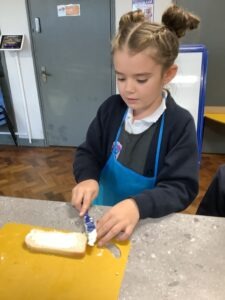
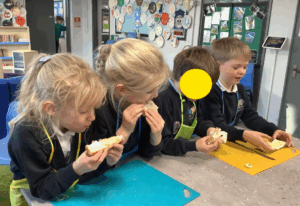
Year 2 had a fantastic time making banana sandwiches this week. The children worked safely and sensibly. They washed their hands carefully and learned how to hold a butter knife correctly while preparing their snack.


What We Did
- Washed hands with soap and water
- Spread butter on bread
- Peeled and sliced bananas with adult help
- Put the banana slices on the bread and made their sandwiches
The children showed great teamwork, followed instructions brilliantly, and enjoyed tasting their creations.
Balancing, climbing and Brilliant Gymnastics
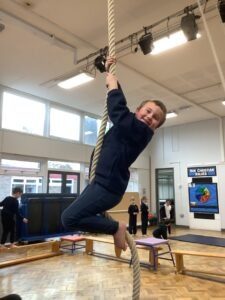
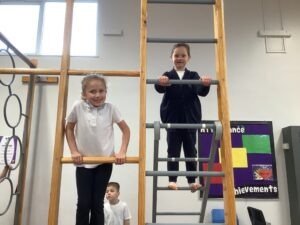
Year 2 had an exciting Gymnastics lesson this week as they explored all the large equipment in the hall. The children practised climbing the ropes and climbing frame, developing their strength and control. They carefully balanced along the beam and moved across the apparatus in different ways, stretching, jumping, twisting and travelling with confidence.
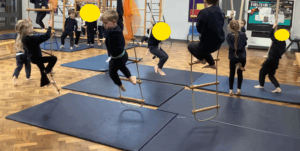
Everyone worked brilliantly to stay safe, take turns and use the equipment responsibly. Using the apparatus helps us learn key gymnastics skills such as balance, coordination and body control.
Subtraction Through 10
This week, Year Two have been learning to subtract through ten using their knowledge of number bonds to ten. We used a bus story to help us picture the maths:
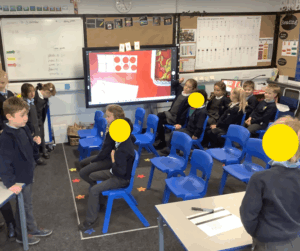
“There were 12 children on the buses. Then 4 got off, so 8 were left.”
We repeated this idea to explore 12 − 5, 12 − 6, and 12 − 7 with the children partitioning the number being subtracted:
subtract to get to 10, then subtract the rest.
To deepen understanding, the children also used tens frames to model the same number stories, showing 12, removing counters and checking how many were left. This helped them clearly see how subtraction through ten works.


💡 How to Help at Home
-
Practise number bonds to 10 (e.g., 6 and 4, 7 and 3).
-
Use small objects (pasta, buttons, Lego) to model stories like “12 take away 5”.
-
Ask your child to explain how they got to 10 first before finishing the subtraction.
-
Try quick oral questions: “If you have 12 and take away 3, how many to get to 10? What’s left?”
Anti-bullying week
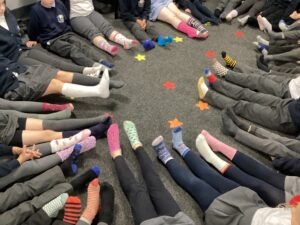
This week, it’s been Anti-bullying week. We came in our odd socks to show that we’re all different and that’s a good thing!
We talked about what bullying actually means. If someone is unkind to us once, it’s okay to feel upset and to talk to people we trust. However, recognising behaviour as bullying means:
S – Several
T – Times
O – On
P – Purpose
If we feel this is happening, it needs to STOP, so we should:
S – Start
T – Telling
O – Other
P – People
These people would be trusted adults such as our parents or teachers.
We looked at different situations and decided whether they were examples of bullying or just unkind behaviour.
We also thought about the different types of bullying, such as:
-
Physical – when someone is being physically hurt
-
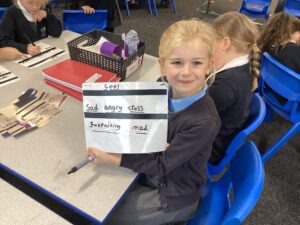
Emotional – unkind words or negative body language
After looking at some friendship scenarios, we thought about how we might feel and what we could do to make sure everyone felt happy again.
We finished the day by thinking about the things we like. Not everyone liked the same things and that’s what makes us unique!
If someone likes something different, it would be good to try it because you might like it too. J
Help at home: Can your child tell you what both STOPs mean?
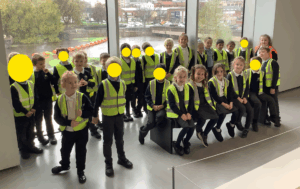
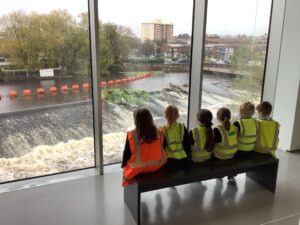
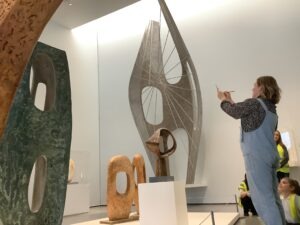
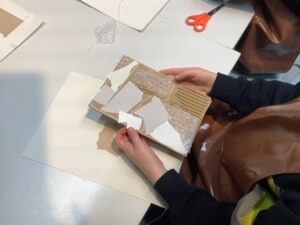
Year 2 Trip to the Hepworth Gallery
Money Week
This week, we’ve had a special focus! It’s been all about money. Here’s what we have been up to:
In maths, we’ve been learning to recognise the value of different coins and notes. We practised ordering them by their value and explored how many 1p coins are needed to make the same amount as other coins.


In our Living and Learning sessions, we’ve been thinking about how people earn money and how to manage it wisely. We discussed the importance of being careful with our spending and prioritising what we need before buying things we simply want. We also talked about how keeping our money safe is very important.


Finally, we considered how we can use our money to help others. This led to a thoughtful discussion about charity, and the children voted for our new school charity which will be revealed next week!
People earn money by working. Deacon
We keep our money in the bank. Luna
I am saving up my money to buy a toy. Elsie
It’s good to give some money to charity to help others. A
Gymnastics in Year 2
This half term, Year 2 have started an exciting new unit in PE, gymnastics. The children are exploring different types of movement, beginning with low, then medium and finally high movements. They have been thinking carefully about how these movements could be inspired by animals, using their bodies to stretch, balance and travel in creative ways.


Throughout the unit, the children will be challenged to try a range of gymnastics poses, including the forward roll, wheel pose and candlestick. As their confidence grows, they will begin to link movements together to create a smooth and controlled sequence.
The children will also have the exciting opportunity to use the apparatus, where they can practise climbing, balancing, and exploring different levels safely.
Do you have a child due to start primary school in 2026?

A video and FAQ’s are available for more support and guidance with applications.
Training day – Arty Ideas
We thought you’d enjoy hearing a little about what went on during our recent teacher training day! Part of the day was dedicated to developing our art knowledge and skills with our resident art teacher, Mrs Boulton.
Teachers got hands-on with paints, pastels and even soap! There was plenty of colour, laughter, and even a bit of friendly competition as we experimented with new techniques and ideas for upcoming art lessons.
The rest of the day focussed on other important areas too, including maths and inclusion. It was a full, productive day – and we left feeling ready and excited for the next half-term!


Health and Hygiene in Science: The Results Are In
Two weeks ago, Year Two set up a very interesting bread experiment to explore how handwashing helps keep us healthy. We wanted to find out how germs affect the food we touch and what difference clean hands can make.
We compared three slices of bread:
- One untouched control slice (straight from the packet)
- One slice passed around the class before washing hands
- One slice passed around the class after washing hands
When we checked back after two weeks, the children were amazed by what they saw. The dirty hands bread had grown the most mould, the control bread had a few small patches, and the clean hands bread looked the best of all. Exactly what the children predicted!

“The dirty one was covered in green and black bits – it looked disgusting!” – Elsie
“That shows how many germs are on our hands if we don’t wash them.” – George
“The clean bread looked the best. Washing with soap really works!” – Jolyon


Staying Safe
From our experiment, we learned that germs are tiny and invisible but can easily spread and make us ill. By washing our hands properly, covering our mouths when we cough or sneeze and keeping things clean, we can help stop germs from spreading – just like Florence Nightingale taught.
Help at Home
Here are some ways the children can keep practising good hygiene at home:
- Wash hands with soap for at least 20 seconds – try singing Happy Birthday twice!
- Always wash hands before eating and after using the toilet or playing outside.
- Use tissues to catch sneezes and coughs, then bin them straight away.
- Help keep your room or toys tidy and clean to reduce germs.
Year Two were brilliant scientists throughout this experiment – observing carefully, making predictions, and discussing what they had learned. What a wonderful way to finish our first half-term in Year Two.