
19 Nov 2021
This week we would like you to learn these spellings that use the suffixes:
-ful, -ness, -less and -ly. We will be having a test on Thursday 25 November.
thoughtful
meaningless
successful
thankless
careful
aggressively
consciousness
hungrily
loneliness
happily
19 November 2021
Living and Learning is the focus of this week’s Talk Time.
I know how to STOP bullying.
As it’s Anti-Bullying Week, we’ve placed a strong emphasis on what bullying is and how to stop it. In fact, ‘STOP’ is an acronym that provides a clear definition of bullying:
Several Times On Purpose
An example of bullying would be someone saying on multiple occasions that you can’t join in with their game. On the other hand, getting upset/angry in the heat of the moment or accidentally bumping into someone wouldn’t be considered bullying. As part of your discussions, can your child identify examples of what bullying does and doesn’t look like?
Our school ethos statement is that our school is a happy and healthy place to achieve and believe. School will not be a happy and healthy place if we don’t know how to stop bullying.
‘STOP’ not only tells us what bullying is, but also how to make it stop:
Start Telling Other People.
Ask your child what ‘STOP’ means – encourage them to remember both: Several Times On Purpose and Start Telling Other People.
This week’s Remember 2s (R2s) are actions to take if you see, or are the victim of, an unpleasant behaviour:
- Challenge the behaviour with that person. It may well have been accidental or something not intended to be hurtful.
- Tell that person that you don’t like that behaviour and that you want it to stop.
- If the behaviour occurs again, let a trusted adult know so they can explore the situation.
Leeds Art Gallery
Today, we travelled into Leeds city centre to pay a visit to the art gallery. This visit enriched the children’s current art learning experiences.
Throughout the afternoon, the classes took part in two workshops. They studied pieces of abstract art by looking closely at the shapes, lines, colours, spaces and patterns. Then, the children were asked to recreate the shapes using their bodies.
I loved seeing all the different pictures.
I wonder how the artists got their ideas?
I never used to enjoy art because I can’t draw. Now, I am loving it!
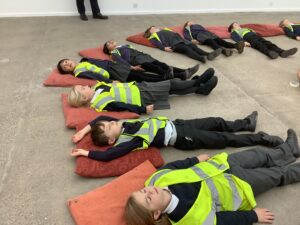
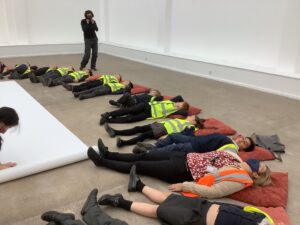
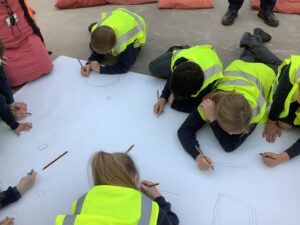
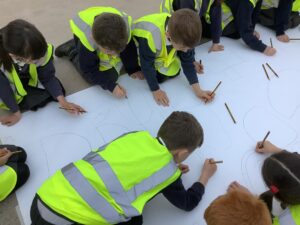
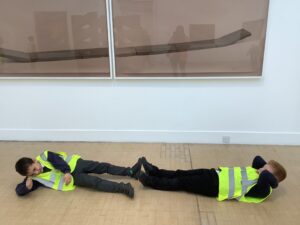
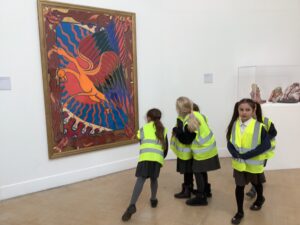

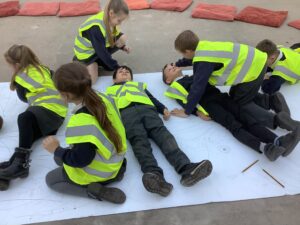
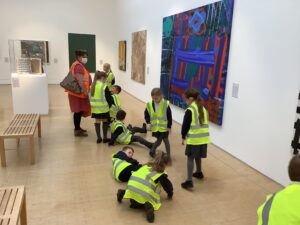
Ask your child about this trip. Can they remember the meaning of abstract art?
This week’s bible story
Persevering in life: Hebrews 12:1-2
Click the link and read the story all about Patrician St John.
Reflection:
Think about what you want to do this year, what you want to achieve. I’m not talking about impossible things, but maybe learning a new skill, or doing better at something, reaching the next level. What if it isn’t so easy, what if it doesn’t seem to be working out straight away – will you give up? Are you willing to fail before you succeed? If you believe in God, what difference will that make?
Just a moment of silence while we think about these things.
Bible Bits:
Listen to what the Bible says about persevering:
“Be determined and confident! Don’t be afraid or discouraged, for I, the Lord your God, am with you wherever you go.” (Joshua 1:9)
“Let us run with determination the race that lies before us. Let us keep our eyes fixed on Jesus….He did not give up…” (Hebrews 12:1-2)
Prayer:
Thank you, Father, that you have given me the ability to succeed, not in everything, but in many things. Help me to play my part by working hard and not giving up. And thank you that you will give me extra help if I ask for it and trust in you. May what I learn not just help me but others too.
Amen
Science
This half term, we are being physicists as we are studying physic. Our topic is all about light. On Thursday we were understanding about darkness being an absence of light. To do this, we created a darkness den in the classroom and all had a turn experiencing it.
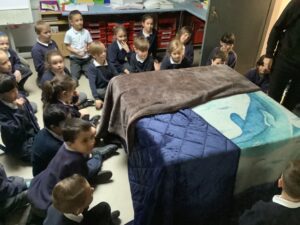
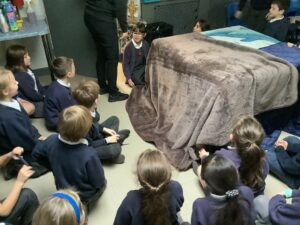
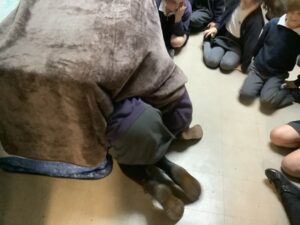
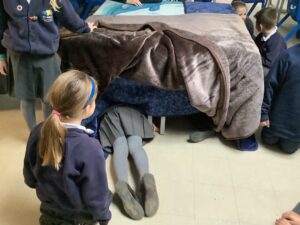
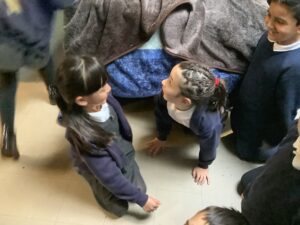
Although not completely dark, it was pretty close!
If we did it again, we agreed that we might use a few more blankets to shut out the light.
Follow this link to see our science vocabulary for this topic.
Remembrance Day
This week across the school, the children have been learning about the meaning of Remembrance Day. From reading activities to art, we have covered an array of learning. The Year 6s have been collecting for the poppy appeal daily and the donations have been very generous. On Thursday 11th we had a minute’s silence in the playground in remembrance and the children were all really respectful.
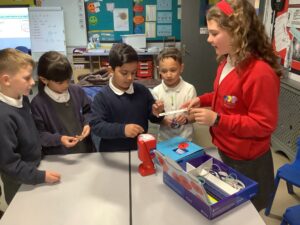
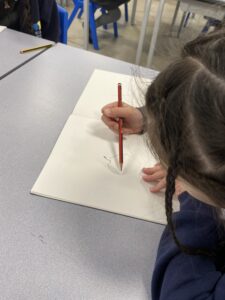
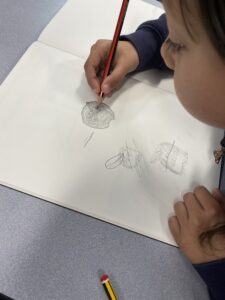
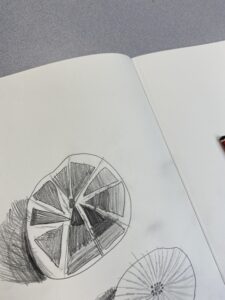
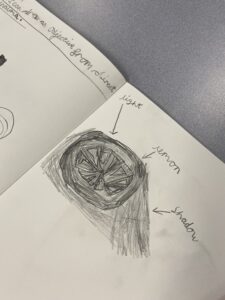
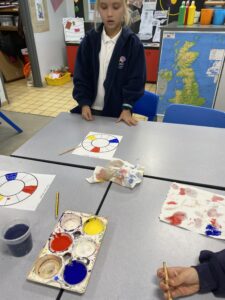
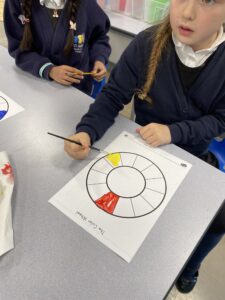
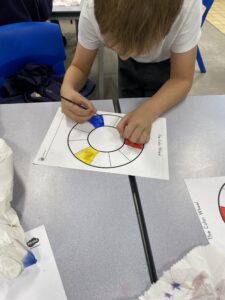
Observational Drawing and Colour Wheels
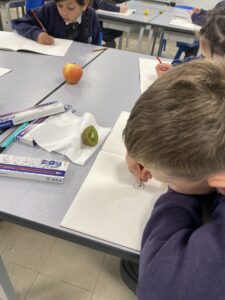
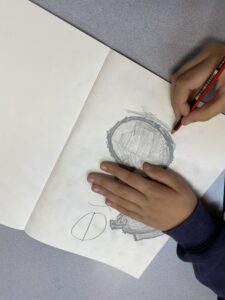
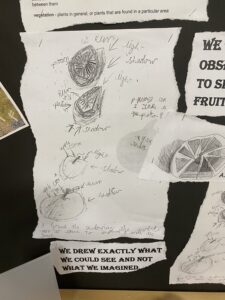
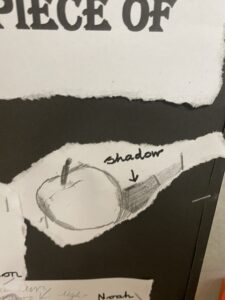
As part of our Art topic, the children have been participating in some observational drawing techniques.

This week’s bible story
How much can we remember?
Let’s start by asking ourselves some questions about today.
– What did you do as soon as you got out of bed?
– What did you eat for breakfast?
– How did you feel when you got to school this morning?
Next, let’s think about last weekend.
– What did you do on Saturday afternoon?
– What did you eat on Sunday?
How about last week?
Have you noticed how it becomes more difficult to remember events the further back in time they are?
These events may have happened quite a long time ago, but they are remembered because they were fun. Happy times tend to stay in our memories for a long time.
Sad times can stay in our memories for a long time, too.
Click the link to read all about Remembrance day and why we remember.
Reflection:
Have a look at the pictures of the poppy. Think about why wearing a poppy is important to people. Wearing a red poppy means, ‘We are remembering together.’
Prayer:
Dear God,
Thank you for the many happy memories that we have.
We are sorry that some people have sad memories at this time of year
As they remember those who have died for our country.
May we wear our red poppies with love and compassion,
And may we remember and be thankful.
Amen.
Lots to look forward to…………..
This half term, we have lots to look forward to.
Writing
We will be learning all about nouns, adjectives and expanded noun phrases.
What is an expanded noun phrase? An expanded noun phrase adds more detail to the noun by adding one or more adjectives. An adjective is a word that describes a noun.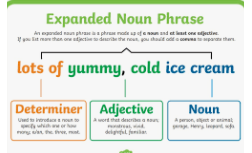
Following this, the children will complete a descriptive piece of writing.
Maths
We will be using some known facts to find a 2 digit number and a 1 digit number that compose 100.
What are known facts?
For this learning, the children need to be secure with their knowledge of number bonds to 10. Please practise these at home with your child.
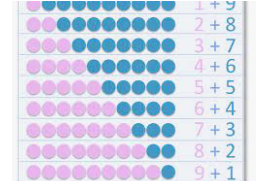
Today, a few children demonstrated how they can use their number bond knowledge effectively.
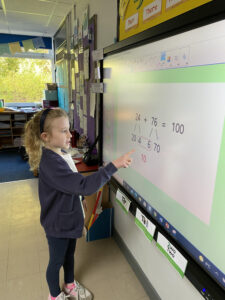
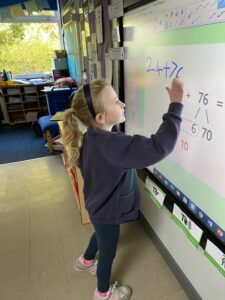
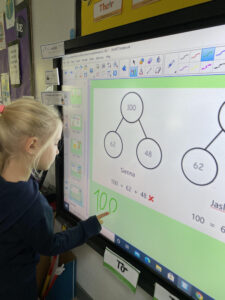
The children are currently learning their 3 times table.
Topic – Art
The class are going to study the work of two very different artists.
Wassily Kandinsky (Russian artist)
Kandinsky believed that painting did not need a particular subject, but that shapes and colours alone could be art. Over several years, he began to paint what would become known as Abstract Art. Kandinsky felt that he could express feelings and music through colours and shapes in his paintings. The shapes he was most interested in were the circle, triangle, and the square. He thought the triangle would symbolise aggressive feelings, the square calm feelings, and the circle spiritual feelings.
Discuss this painting with your child.

Martha McDonald Napaltjarri (Australian artist)
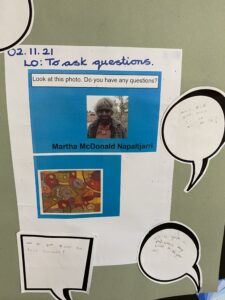
Napaltjarri used intersecting lines softened and contrasted with concentric circles. Her imaginative and beautiful interpretation of landscapes led her work to become highly sought after. Her work is held in universities across Australia. What are your thought about this painting?

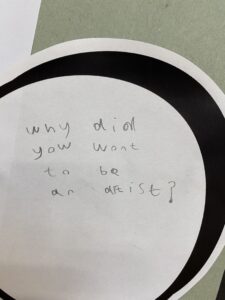
As part of a reading lesson, we thought about some questions we would ask Martha about her life as a famous artist.
Who inspired you to get into art?
Do you have a favourite painting?
Do you have any children and do they like art?
Why did you choose this style?
How did the landscape inspire you?
What do you think of Kandinsky’s work?
Finally, a quick reminder.
Some of the children have been asked to make sure they have their reading books in school every day. Please encourage your child to read at home, too.
If there is anything we can help with then please either pop in before or after school. Alternatively, call the office to arrange to see us. We are always glad to help where we can.
This week’s bible story
A persistent builder: Genesis 6:5-22
God gave Noah a pretty big job; God asked him to build a huge boat. Even though he didn’t live near a lake or ocean, Noah persevered in finishing the job that God gave him.
Someday, God might give one of us a hard job to do, too. God might ask you to be friends with a kid who everyone else is choosing to ignore. He might ask you to forgive a brother or sister who teases you every day. God was pleased with Noah’s perseverance, and God will also be pleased with you when you persevere in doing what is right.
Reflection:
What is the biggest project that you have built out of Lego, wooden blocks or something else?
How long did it take? Did it take much perseverance to keep going and finish the project?
What would have happened if Noah had given up and left the ark half built?
Prayer:
Dear God,
There are times when we face some hard challenges. Sometimes those challenges seem so big for us to do and to finish. Help us to persevere and remember that we can do it.
Amen