
Lost and Found
This week, we’ve continued to enjoy the story Lost and Found by Oliver Jeffers.

We explored a world map and located England and Antarctica, before tracing the journey the boy and the penguin would take from where we live in the UK all the way to the South Pole. We revisited what we already know about maps, with some children remembering that blue shows oceans and green shows land. We also talked about the hot line called the Equator and how the countries on or near this line where deserts and orange on the map.
We also compared our weather with the weather in Antarctica and talked about how different it is. Our word of the week is climate and we’ve been using it to describe what the weather is usually like in different places.
Maths; the staircase pattern
In Maths, we’ve been looking at counting and ordinality- specifically, the ‘one more’ relationship that creates ‘the staircase pattern’.

Phonics
This week, our phonics learning focused on the digraphs oo, ar and or.
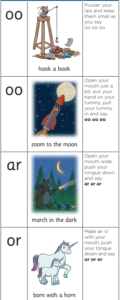
We also learned the tricky words was, you and they. Tricky words are read by sight, as they cannot be sounded out easily.
Romans In Britain
We have begun our exciting new half-term topic, all about the Romans and Anglo-Saxons.
We started by exploring the word chronology, learning that it means putting events in the order they happened. After examining key moments from British history, we successfully placed them into chronological order and did a fantastic job.


To gain context about life before the Roman invasion in 43 AD, we explored Iron Age Britain. We learned about the Celts, who lived in tribes, and discovered what daily life was like during this time.
We then moved on to discuss why the Romans wanted to invade Britain. We learned that Britain’s rich natural resources, such as precious metals and fertile farmland, made it an attractive place for trade and expansion.
When the Romans finally succeeded in expanding their empire into Britain, it was a huge cause for celebration, as they had been trying to conquer it for many years.
We imagined what Emperor Claudius might have said to his Roman citizens and wrote some amazing speeches. Using our fantastic oracy skills, we performed our speeches with confidence and enthusiasm.
Here is an example of one of our brilliant speeches:
Help at home: Can you child put some events from their life in chronological order?
Celebrating What Makes Us Unique in Year 2
This week in Living and Learning, Year 2 have been learning about individual liberty, tolerance and respect as part of our work on British Values.
The children discussed the many things that make us unique, including our ethnicity, religion, interests, likes and dislikes. We talked about why differences should be celebrated and how showing respect helps everyone feel valued and included.

The children shared some lovely reflections:
Thomas “It would be boring if we were all the same.”
Ava “Everyone is special in their own way.”
Alfie “We should be kind even if people are different to us.”
Help at Home
Watch this short video with your child and discuss.
https://www.bbc.co.uk/bitesize/articles/zqkptrd
Managing Feelings – Dodgeball Edition
This half-term, Year 5 are learning how to play dodgeball. This sport can be a lot of fun – the children have to mix many fundamental skills together to be successful (running, jumping, throwing, catching etc). Whilst taking part, you may experience many different feelings for lots of reasons.
On Wednesday, Year 5 had a good dodgeball lesson. However, towards the end, some feelings (shown below) took over. After the lesson, we held a feelings first session where we shared any feelings we experienced within the lesson – these are shown below:

As a class, we reminded ourselves that there’s no such thing as a negative feeling – it’s completely normal to feel the ways we did. We discussed some reasons for those feelings:
It was overwhelming when we were playing because there was lots of noise and lots of dodgeballs to look out for. – Beau
I got annoyed because people didn’t like me throwing the ball hard and I ended up walking off – anonymous
I felt happy through the lesson but I think my competitive side got the better of me – anonymous
I was getting cross and frustrated because our team kept on getting out really quickly and we wanted to keep playing – Isla
When people were winning, sometimes they were over celebrating and it made me a bit annoyed – Emily
We then used the feelings battery (shown above) to help us understand how to handle certain emotions. If we show too much of a particular emotion, it can lead to reactions that often don’t match our personalities. When playing a high-intensity game like dodgeball, it’s vital that we manage our feelings well and stay ‘in the green zone’.
So, what did we do?
Today was our next dodgeball lesson. To begin, we reminded ourselves of the feelings we might experience. We then decided to create some rules and challenges to help us stay in the green zone. Here’s a few that we came up with:
- Playing games of silent dodgeball. This way, the children could completely focus on the skills of throwing and dodging.
- Having a fixed referee to help the games (Mr Freeman did this).
- Offering pointers and tips throughout the session to each other
- For children with a powerful throw, a challenge was to throw from the very back line only. This challenged those particular pupils and relieved those potential ‘cross’ and ‘frustrated’ feelings for others.
After the lesson, we looked at each other and just smiled. What a fantastic lesson we had. Everyone was happy and healthy and we all managed our emotions well. I am so proud of all the children and we all cannot wait for our next dodgeball lesson!
Help at home:
Discuss some of the feelings with your child that they felt in dodgeball. How did our rules on Friday help manage those feelings? Do you have any more top tips ahead of our lessons next week?
Living and Learning – Individual Liberty and Respect and Tolerance
This half-term, we’re learning more about our British Values in our living and learning lessons. Last week, we focussed on democracy (specifically whether children should have the right to vote at 16). Here’s our statement for this week:
I know why Individual Liberty and Respect and Tolerance are important.
We began by recapping the meanings of each value (shown below).

Year 5 went on to learn how these values work together. We all have the rights to freedom and to be ourselves, but this still has to fall within our laws. We need to show respect and tolerance of others and treat how we would want to be treated ourselves (mutual respect). We had a look at how respect and tolerance links to our protected characteristics.

Finally, we ended the session with a poem by James Barry. This poem promotes equality and that everyone deserves the same opportunities.
Help at home:
Read this poem together with your child and listen for fluency. What’s the overall? Do you notice a word that is repeated many times? Why?

Topic- History
History: Toys and Games.
Over this half term, we will be exploring toys from the past and comparing them with the toys we enjoy today. This week, the children shared their favourite toy or game and talked about what makes it special to them. We also discussed whether their favourite toy or game might have been around when their parents or grandparents were children and how different toys look from the past compared to the present day.
Help at home:
Please take a photo of your child with their favourite toy or game and email it to school so we can share it in class. Thank you to those parents/carers who have shared these already, the children have thoroughly enjoyed guessing which toy belongs to their friends.
Here are some more, can you guess who they belong to?


Science – Mammals
This week in science, we’ve been busy learning all about mammals and what makes them special. We sorted lots of different animals into two groups (mammals and not mammals) and explained why we chose each group.
We discovered that mammals are animals that have things in common:
- hair or fur
- warm-blooded
- their mums usually feed their babies with milk
- give birth to live babies
As scientists, we talked about the facts we noticed and used them to help us decide which group each animal belonged in. Some animals were easy to sort but others needed us to think carefully about their features before we made our choice.

Help at home by going on an animal hunt around your home or garden. Find pictures of animals in books or online and ask your child whether they think it’s a mammal or not. Can they explain their reasoning using the features we’ve learned?
Living and Learning: I know why British Values are important
In our Living and Learning lessons this term, Year 3 have been exploring British Values with a special focus on individual liberty, respect, and tolerance.
The children have learned that individual liberty means being able to make choices, share opinions and be themselves, while also understanding that these choices come with responsibility.
We have also focused on respect and tolerance, learning how to be kind, fair and accepting of people who may have different beliefs, backgrounds or ideas. The children shared thoughtful examples of how they can show respect in school, at home and in the wider community.

Year 3 showed excellent maturity during discussions and demonstrated a strong understanding of how these values help us live and learn happily together. We are very proud of their positive attitudes and thoughtful contributions.
Help at home:
Discuss British Values:
- Why are they important?
- What would our country be like if people didn’t show this?
RE
Our RE topic this half term is How do Buddhists live a meaningful life?
In our first lesson, children described happiness and reflected on the happiness and contentment in their own lives. Firstly, we learned about the United Nations Convention of the Rights of the Child (UNCRC) promise.


We then listened to two songs: Don’t Worry be Happy by Bobby McFerrin and Happy by Pharrell Williams.
https://www.youtube.com/watch?v=Kxln1IiyKls
https://www.youtube.com/watch?v=ZbZSe6N_BXs
We thought about how the beat made us feel and the songwriter’s message to the listener.
Finally, we wrote down things that make us feel happy and contented. We wrote these down on leaves to create our own Year 6 happiness tree.

In our second lesson, we described different types of suffering and how it may be overcome. We learned that in Buddhist belief and practice, suffering is not just tragic events caused by natural, accidental or deliberate events; suffering is also about little things that mean life is not quite perfect.
We discussed different examples of suffering and possible causes. We then considered what could be done to potentially overcome the suffering.
Next week, we will explore how Siddhartha Gautama (the Buddha) searched for the answer to suffering.
Living and Learning
I know why Individual Liberty and Respect and Tolerance are important
In our Living and Learning lessons, we have been focusing on the British values: rule of law, democracy, respect and tolerance and individual liberty. Find out more here: https://50ba64cf42aa5ce33ed5ffd3ca44503c-11586.sites.k-hosting.co.uk/stjames/find-out/british-values/
This week, our focus was on respect and tolerance and individual liberty.
To help us understand individual liberty, we watched ‘We are all born free’:
https://www.youtube.com/watch?v=x9_IvXFEyJo
We then answered these questions:
- We are all free to do what we want but this must be within the law. What would happen if everyone just did their own thing?
- What do we have the right to?
- We have the responsibility to…
Whilst we have individual liberty as one of our British values, we need to ensure we are showing respect and tolerance of others.
Why is this important?
What would our country be like if people didn’t show this?
Help at home: Can your child tell you the British values and what they stand for? Discuss the questions together.