
Dictation helps the children develop their spelling, handwriting, grammar and listening skills


Maths – Patterns
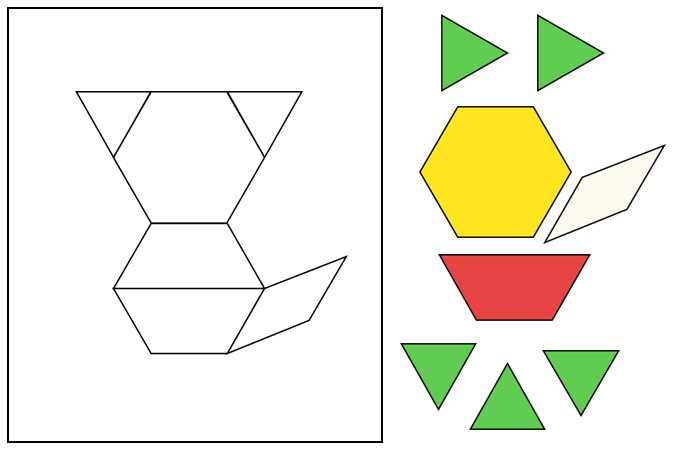
This week, in maths, we’ve been learning about 2D shapes and patterns. Our focus has been on aligning shapes with one another by rotating them to connect their edges.
The children have been developing their spatial reasoning skills by placing and rotating shapes to create images.
We’ve also enjoyed exploring patterns. A pattern is a repeated arrangement of shapes, lines or colours. We’ve been noticing and describing the characteristics of patterns and had a go at making some of our own.
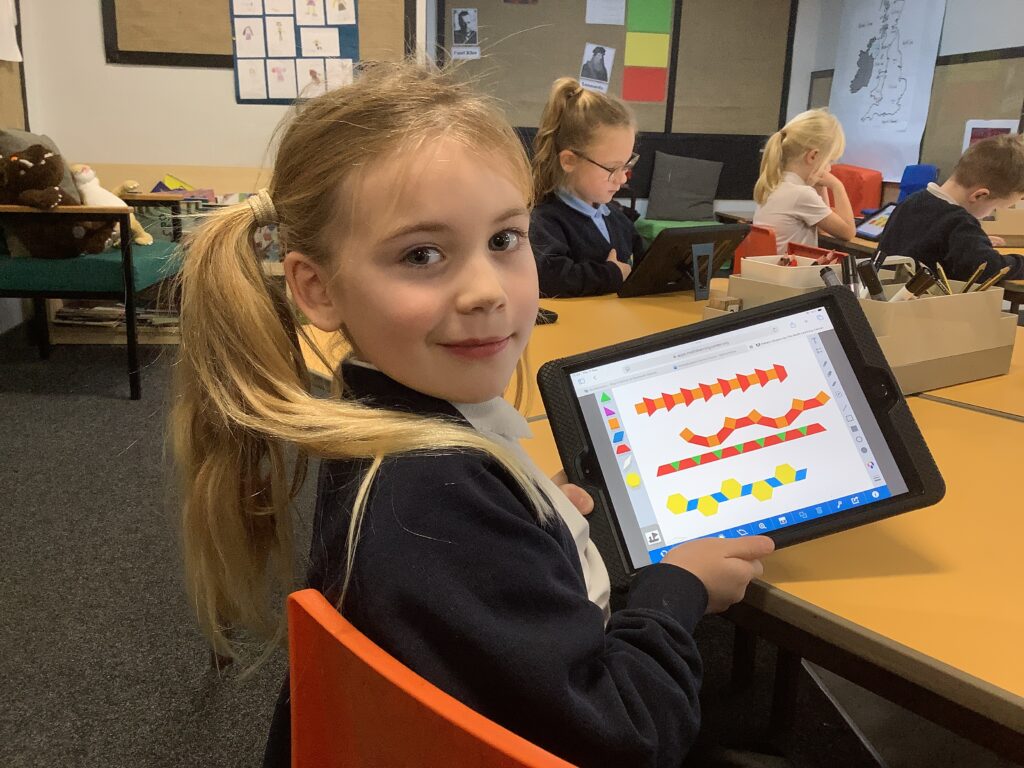
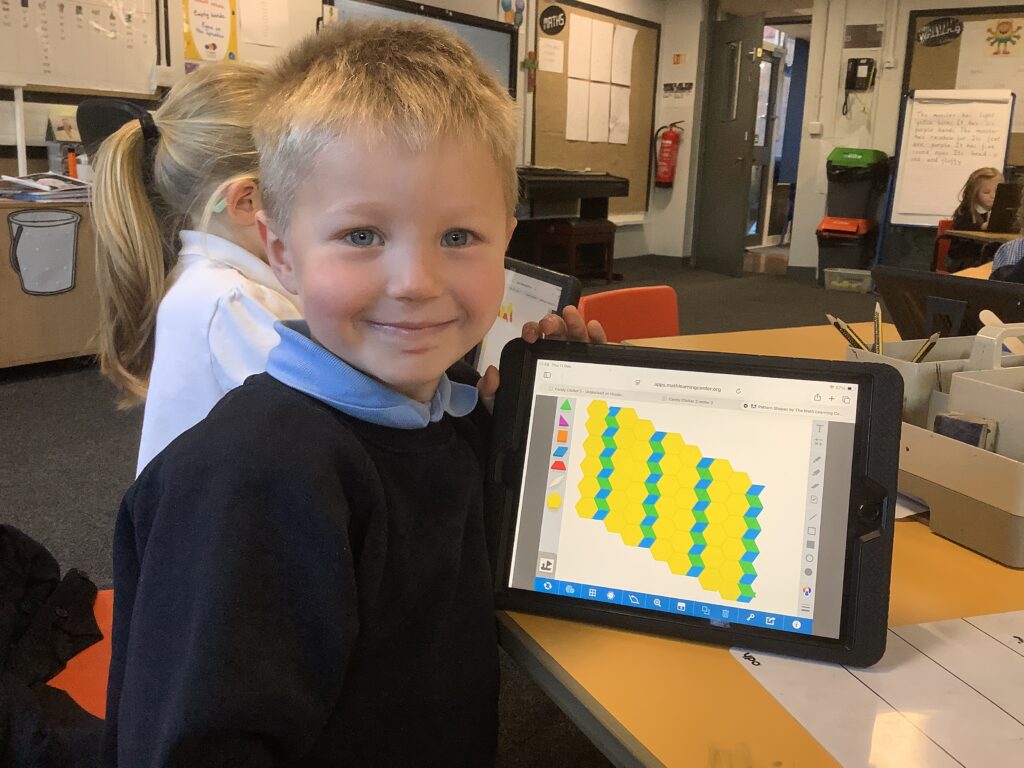
Help at home by making some images or patterns yourself.
Recount Writing
This week, the children wrote their own independent recounts of making their banana sandwiches and they were fantastic. Using what they have learned this half‑term, they included expanded noun phrases (adjective, adjective noun) and time connectives, remembering to use a comma after each one.


The class impressed me with their careful handwriting, neat presentation, and brilliant word choices. They used adjectives such as soft, bright, crumbly, scrumptious, and delicious to describe the process.
Writing – Nouns and Adjectives
In writing, we’ve been learning about nouns and adjectives.
- A noun is a person, place or thing.
- An adjective gives information about a noun.
We’ve had lots of fun using nouns and adjectives to describe different parts of a monster, inspired by Not Now Bernard by David McKee. The children thought carefully about what the monster looks like and used adjectives to add information.
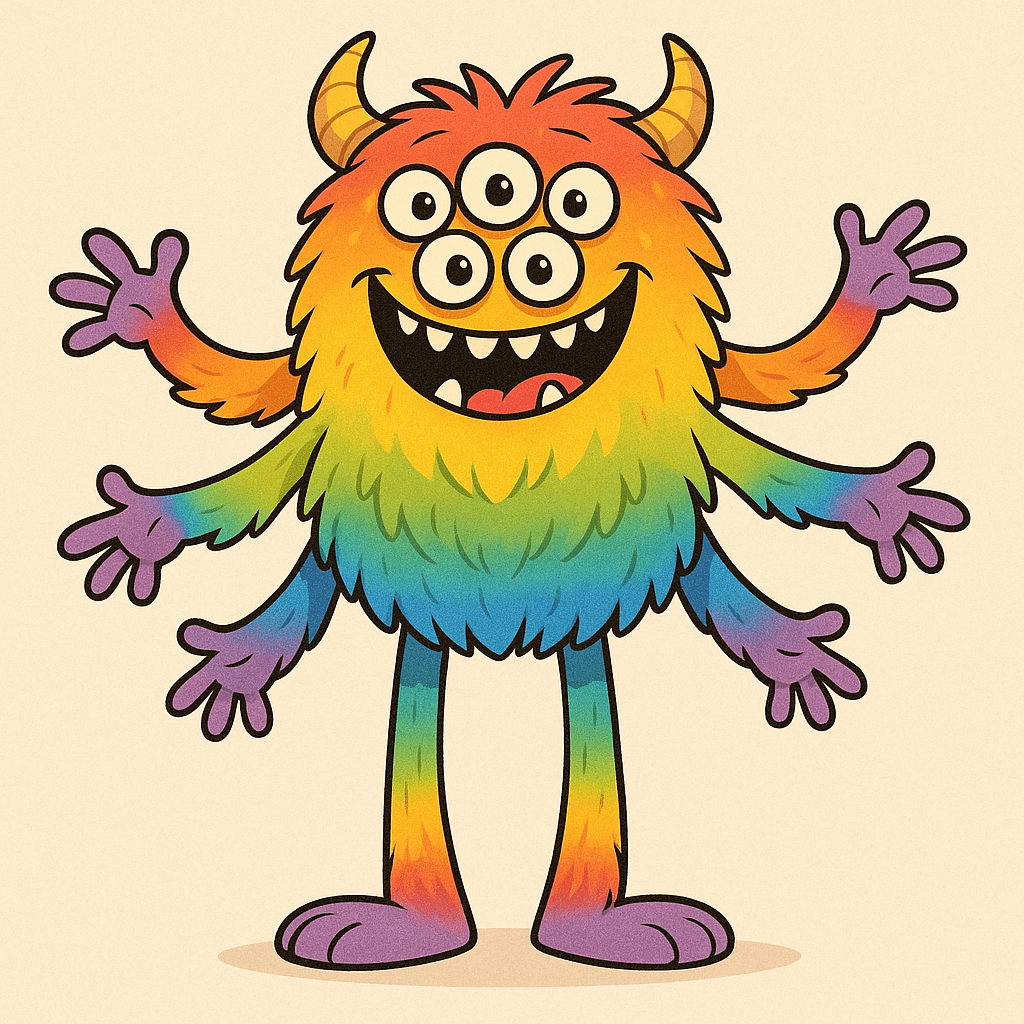
The monster has five friendly eyes.
He has sharp, pointy horns on top of his red head.
It has gigantic, purple feet.
The monster has rainbow fur all over its round body.
Help at home by choosing an object at home (like a toy or a piece of fruit) and ask your child to name the noun then think of some adjectives to give information about it.
Amazing Gymnastics
Throughout this half term, the children have been developing their gymnastic skills. The class have learnt about the importance of spacial awareness. This has helped with balance, coordination, and safety.
Over the last few weeks, the children have been given the opportunity to put their gymnastic skills into practice by using the big apparatus.
It was lovely to see them, taking safe risks, being resilient and thoroughly enjoying themselves.


Living and Learning: I can give and receive compliments
This week in Year 3, our Living and Learning focus is I can give and receive compliments. We talked about what compliments are and why they are important. We discussed how a kind word can make someone feel happy, valued and confident.
As a class activity, each child wrote a compliment to themselves: something they are good at or something they like about themselves. Then, we did a fun activity: each child picked someone else’s name out of a hat and wrote a compliment about that person.
It was lovely to see how thoughtful and kind the children were when writing compliments for each other. They clearly understood how good it feels to receive positive words and how powerful kindness can be.
Help at home: Before bed, say one thing they did well that day.
Food Technology – Tomato and lentil soup
This week, Year 4 have loved making tomato and lentil soup in Food Technology.
We thought carefully about how to keep ourselves safe.
- We washed our hands to make sure we used good hand hygiene to help keep us healthy.
- We wore aprons to protect our clothes.
- We used the bridge cutting method and the claw cutting method to cut up our ingredients to keep our fingers safe.
- We were very careful near the hob which got very hot!


The soup was a hit in the taste test – we hope you will enjoy making the recipe again at home!
Help at home: Next time you are peeling or cutting vegetables, ask your child to show you how they have learnt to do this safely.
Owl Babies
This week our focus book has been Owl Babies by Martin Waddell.

We’ve really enjoyed using a story map, we created our own actions to help us retell the story from the beginning to the end. We practised remembering key events from the story and included the repeated phrases.
All owls think a lot.
‘I want my mummy!’
‘What’s all this fuss!’
Our word of the week has been swoop and we’ve enjoyed using it during the week.
‘Mummy owl swooped down to the baby owls.’
‘Swooping is when you go from high up to low down.’
We’ve also continued exploring nocturnal animals this week.
Help at home: Ask your child if they can explain what a nocturnal animal is and if they can name any.
Phonics
Autumn 2 week has focused on words with s /s/ added at the end (hats, sits), words ending s /z/ (his) and with s /z/ added at the end (bags)
We’ve learnt the tricky words; we, me, be
Tricky words are words that should be read by sight.
Poetry Picnic
Each week we will be learning a new poem. We will recite this poem each day. By saying the poem out loud, we can focus on the sounds and rhythm of each word or line. We talk to the children about how this can help us become better readers. This week’s poem is called Wise Old Owl.
A wise old owl sat in an oak,
The more he heard, the less he spoke.
The less he spoke, the more he heard.
Why aren’t we all like that wise old bird?
Maths; counting, ordinality and cardinality
In Maths, we’ve revisited careful counting. Making sure we say our numbers in the correct sequence (ordinality) and stopping ‘at the stopping number’ (cardinality).
Have a happy and healthy weekend and thank you as always for your support.
Why does Christmas matter to Christians?
This half term, our big RE question is “Why does Christmas matter to Christians?” We have spent time exploring the events of the Nativity story, which we now remember very clearly.
One of our key vocabulary words is Incarnation, which means that Christians believe Jesus was God in human form, coming to Earth to show people what God is like.
In our most recent lesson, we compared the birth of Jesus with the birth of a baby today. We identified many differences and discussed them thoughtfully. We also considered how people today prepare for a new baby, and how people in the Nativity story prepared for Jesus’ birth.
My sister was visited by friends and family. Jesus was visited by kings and sheppards. – Lyla
It must have been a very difficult journey for Mary. -Frankie
Normally a baby is born in hospital. – Austin


Topic (Art) – Leonardo da Vinci
This half term, in topic, we’re artists. This week, we’ve explored three famous pieces:
- The Vitruvian Man
- The Last Supper
- The Mona Lisa
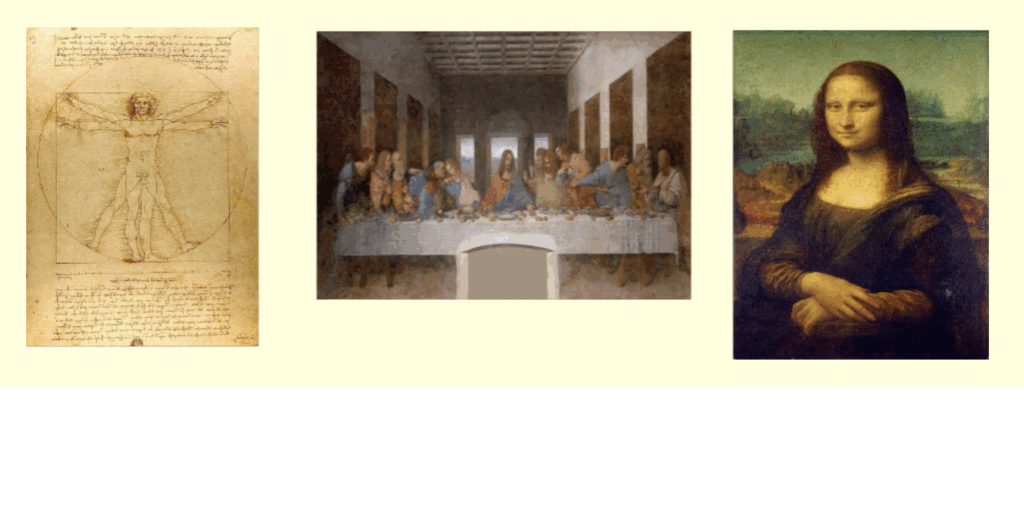
We compared the works and talked about whether we thought they had been created by Leonardo da Vinci or Paul Klee (our focus artists this half term). The children used our art vocabulary skilfully, thinking carefully about line, shape, pattern, texture, tone, primary colours and secondary colours.
“I don’t think it’s Paul Klee because there are no shapes.”
“I think Leonardo da Vinci made it because the tone is darker.”
“All the people look quite real so I think it’s Leonardo da Vinci.”
We then decided which picture might be the odd one out and explained why. We had some fantastic discussions…
“That one (Vitruvian Man) reminds me of Paul Klee because it has a square and a circle.”
“One of them has writing on.”
“It looks like it was done with a pen or pencil and the others look like paint.”
“The Mona Lisa is the odd one out because she’s the only lady.”
Help at home by exploring some art together. Encourage your child to talk about line, shape, pattern, texture and tone.